
Choosing the best floating drone for sea fishing depends on your specific needs, as no single model covers every possible scenario perfectly. Your choice usually comes down to whether you prioritize flight range, payload weight, or ease of use in harsh environments. While some users need the stability of a dedicated drone to reach distant offshore spots, others prefer the simplicity of a boat for precision bait delivery. The SwellPro Fisherman MAX FD2 and the SwellPro Fisherman FD1+ represent the two main approaches, one offering advanced monitoring and the other focusing on entry-level reliability.
All 10 products side by side — scroll sideways to see every column.
| Best Choice | ||||||||||
| Preview |  |  |  |  |  |  |  | 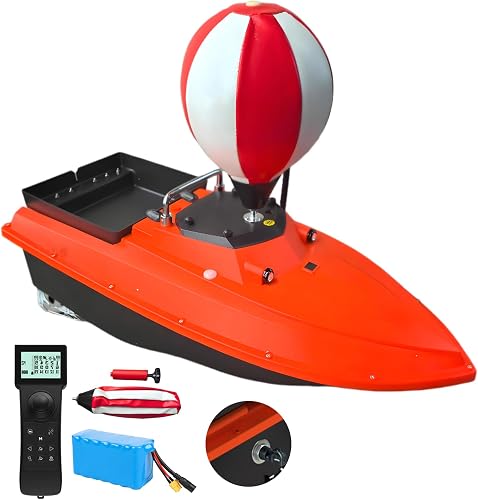 |  |  |
|---|---|---|---|---|---|---|---|---|---|---|
| Product | SwellPro Fisherman MAX FD2 | SwellPro Fisherman FD3 | SwellPro Fisherman FD1+ | Ideafly Fishing Drone | Triblade FPV Fishing Drone | GPS Fishing Drone | Jabo Dolphin Bait Boat | RESEAPRODUCTS Fishing Bait Boat | Latest RC Bait Boat | GPS RC Bait Boat |
| Brand | SwellPRO | SwellPRO | SwellPRO | Camolech | Camolech | KUNRUN | CRESEAPRODUCTS | CRESEAPRODUCTS | ClouGlow | RIAHNEAH |
| Best for | Best Overall | Best for Heavy Payloads | Best Entry-Level | Best Portable Design | Best for Long Range | Best GPS Navigation | Recommended | Recommended | Recommended | Recommended |
| The listing says | 7 lb bait capacity and 0.9 mile range IP67 rated drone and IP55 rated remote | 4.4 lbs payload capacity 1.3 km casting range | 4.8 lbs bait capacity 1.3 km casting range | 4K camera with 1500m transmission GPS automatic heading correction | IDF-9 flight control system GPS automatic heading correction | 600g precision payload release 7.2-inch HD smart touchscreen controller | Automatic navigation from 20 to 300 meters Stores 16 target bait points | Auto bait release and return 12V motor with 150m/min top speed | Integrated water depth and temperature detection GPS navigation for 100 waypoints | 16 GPS points and auto return 4.41 lbs bait capacity |
| More information | Buy on Amazon | Buy on Amazon | Buy on Amazon | Buy on Amazon | Buy on Amazon | Buy on Amazon | Buy on Amazon | Buy on Amazon | Buy on Amazon | Buy on Amazon |
1. SwellPro Fisherman MAX FD2 Advanced Fishing Drone with Bait Release
Best for: Serious anglers needing precise aerial monitoring and heavy-duty bait transport.
This model is designed for those who need to see exactly where they’re dropping bait without the hassle of connecting a phone. The inclusion of a color-screen controller allows you to monitor surface conditions and flight paths directly. This is a major advantage during offshore trips where sun glare often makes phone screens unreadable. Its IP67 rating ensures the aircraft body survives the salt and water spray typical of sea fishing.
This drone isn’t for casual users who want a lightweight, “grab-and-go” solution. Its size and advanced feature set require more setup time than smaller consumer models. Always verify your local Remote ID requirements before takeoff, as this unit includes the necessary module for compliance.
If you’re flying in calm conditions, the GPS-assisted hovering keeps the drone steady while you scout the water. If you lose signal or hit a low-battery state, the automated return functions will guide the aircraft back toward your launch point. However, if you’re flying in winds exceeding 30 mph, these safety features may struggle to compensate for the drift.
Good if:
- You want to view your flight path on a dedicated, glare-resistant screen.
- You need to carry heavy bait rigs for shark or offshore fishing.
- You fly in harsh environments that require a corrosion-resistant, IP67-rated aircraft.
Skip it if:
- You want a compact, lightweight drone for quick, casual family outings.
- You prefer a simple, phone-based app interface over a dedicated, larger controller.
- You don’t have the time to manage complex pre-flight setups and local regulatory compliance.
2. SwellPro Fisherman FD3 Fishing Drone with 4K Camera & 4.4LBS
Best for: Anglers who need to carry heavy payloads over long distances.
The FD3 focuses on raw capability, offering a 4.4 lbs payload capacity and a 1.3 km range. Its design emphasizes stability, with Level 7 wind resistance helping you maintain control even when coastal winds pick up.
The slide-in battery design is a practical touch for those who spend full days on the water. It allows you to swap power sources quickly without stopping for long.
This drone is a strong choice for those who need to cover large areas of water to find the best spots. GPS 9.0 technology provides precise positioning, which helps you return to those exact locations later. However, it lacks some of the specialized display features found in more advanced models. You’ll rely on your own judgment or a connected device for monitoring.
If you’re fishing in calm, inland waters, the IP67 waterproof design might be overkill for your needs. Use this model primarily in harsh, wet, or rainy environments where its sealed construction provides a distinct advantage. It isn’t intended for those who prioritize the absolute lightest gear. Its focus is on heavy-duty performance and wind-resistant flight.
Good if: * You frequently fish in areas with strong, challenging winds. * You need to swap batteries quickly during long fishing sessions. * You require a consistent, long-range casting solution.
Skip it if: * You’re a beginner who finds complex flight controls overwhelming. * You prefer a drone that includes a built-in display on the remote. * You only fish in calm, protected environments where waterproof ratings are unnecessary.
3. SwellPro Fisherman FD1+ Best Entry-Level Fishing Drone with Bait Release
Best for: First-time drone fishers who want a reliable, easy-to-use system.
The FD1+ is built for simplicity, featuring calibration-free flight sensors that help newcomers get into the air without extensive training. Its self-floating design and IP67 waterproof body mean you don’t have to worry if it touches the water surface during a landing. Keep in mind that while the aircraft is sealed, the remote controller isn’t waterproof; keep the controller dry at all times to avoid permanent damage.
The automatic flip feature is a helpful inclusion, allowing you to right the drone if it happens to land upside down. Simply use the joysticks to restore it to an upright orientation before piloting it back to shore.
This model strikes a balance by offering a 4.8 lbs bait capacity, which is substantial for its entry-level positioning. It allows for the use of heavier baits to attract larger fish. While it provides a 1.3 km range, it’s best suited for those who want a straightforward experience rather than advanced cinematography or complex telemetry.
If you lose sight of the drone or encounter low battery levels, use the auto-return feature. One press of a button brings the unit back to your original take-off point. This prevents the common mistake of overestimating your battery life, which often leads to lost equipment.
If you’re flying in open water, use the full 1.3 km range to reach deep-water zones without needing a kayak. It isn’t the right choice for someone who wants professional-grade camera features or high-end obstacle avoidance systems.
Good if:
- You’re new to drone fishing and want an easy setup.
- You want the assurance that comes with a self-floating, waterproof body.
Skip it if:
- You need advanced obstacle avoidance for flying in tight spaces.
- You’re looking for a high-end camera for cinematic video production.
4. Ideafly New Fishing Drone with 4k Camera
Best for: Travelers who need a portable, lightweight drone for family fishing trips.
This drone stands out for its compact, foldable design, making it easy to pack into a suitcase for vacations. Despite its size, it includes a 4K camera with electronic anti-shake, allowing for decent video capture while you fish. The lack of need for magnetic compass calibration is a significant convenience, as it reduces the amount of time you spend on pre-flight setup at the beach.
The drone handles a 1kg payload, which is sufficient for light bait releases but insufficient for heavy-duty, large-scale offshore gear. If you’re targeting large game fish that require heavy rigs, look for a more robust platform. This model is built for the casual angler who values mobility over massive lifting power.
The system features GPS automatic heading correction and interference monitoring. You can trust the technology to maintain stability without manual calibration, which is a major advantage when moving between different coastal locations. If your flight path takes you near metal structures or high-interference areas, the built-in monitoring will alert you to potential issues before you take off.
It’s designed to be user-friendly, with an app-based monitoring system that keeps you updated on flight status. You can track real-time video transmission up to 1500 meters away. It’s the perfect choice for a family day at the beach where you want to combine fishing with some fun aerial photography.
Good if:
- You need a compact drone that fits easily in your luggage.
- You want a simple, app-controlled experience for casual fishing.
- You enjoy capturing high-definition video during your beach trips.
Skip it if:
- You need to carry heavy bait rigs for deep-sea fishing.
- You prefer a dedicated hardware controller over a smartphone app.
5. Best Fishing Drone with Bait Release 3KG Payload
Best for: Anglers who need a robust, long-range solution with added night-fishing capabilities.
The Triblade FPV features a patented waterproof design that allows you to drop bait multiple times without needing to power down the unit. Its 3-blade propellers provide smoother flight and stronger load-carrying performance, which is essential when dealing with heavy payloads. The integrated night light function is a standout feature for those who prefer fishing during low-light hours.
The drone utilizes the IDF-9 flight control system. This hardware includes built-in GPS automatic heading correction and interference monitoring, which eliminates the need to calibrate the magnetic compass before takeoff. If you notice erratic behavior near metal structures, rely on the GPS compass interference monitoring to signal when the environment is too unstable for safe flight.
While it offers a 1000m transmission range, its reliance on a phone app for monitoring means you must maintain a reliable smartphone connection. The 4K camera and single-axis gimbal provide real-time data and video, but you must ensure your mobile device supports 5G WiFi to maintain the feed.
This is a specialized tool that favors durability over the simplicity of entry-level models. It isn’t suitable for those intimidated by complex hardware. If you’re a beginner, prioritize learning the manual flight controls before attempting a 3kg bait drop, as the added weight significantly alters the drone’s handling characteristics.
Good if: * You often fish in the dark or under low-light conditions. * You want a drone capable of multiple bait drops without a power cycle. * You need a stable flight platform with specialized 3-blade propellers.
Skip it if: * You’re uncomfortable using a smartphone app for flight monitoring. * You prefer a simpler, less technical drone setup.
6. Drones with Camera for Adults 4K
Best for: Anglers who prioritize precision navigation and automated, safe flight.
This drone is packed with technology, including 360-degree obstacle avoidance and a 10 km FPV transmission range. The 7.2-inch smart touchscreen controller is a major highlight, as it removes the need to use your personal phone for flight monitoring. By relying on the dedicated controller, you avoid common interruptions like incoming calls, message notifications, or smartphone battery drain. With an 80-minute total flight time provided by two batteries, it’s designed for long, uninterrupted sessions.
The precision payload release system handles a 600g load, making it a great choice for those who want to drop bait in specific locations beyond traditional casting distance. If you’re fishing in windy conditions, the 3-axis gimbal and EIS ensure your 4K footage remains stable. Because it’s highly automated, it isn’t the best choice for someone who wants to feel the controls manually or for those who don’t need complex waypoints.
If you’re flying near trees or rocky coastlines, trust the 360-degree omnidirectional sensors to prevent collisions. However, if you’re simply looking for a lightweight hobby drone, the extra weight of the payload system and the complexity of the GPS modes may feel like overkill.
Good if: * You want a high-end, dedicated touchscreen controller. * You need extensive flight time for all-day fishing trips. * You value safety features like 360-degree obstacle avoidance.
Skip it if: * You prefer a simple, lightweight drone without advanced automation. * You’re on a tight learning curve and find complex GPS settings confusing.
Choosing the best floating sea fishing drone
Most of these drones share the core ability to deliver bait over water, which is the primary reason to choose a drone over a standard fishing rod. Models like the SwellPro Fisherman FD3 and the Triblade FPV Fishing Drone are similar in their focus on heavy-duty performance and wind stability, making them interchangeable for many coastal anglers. The choice between them often comes down to the interface you prefer—a dedicated controller versus a smartphone app—and whether you need specialized night lighting.
Conversely, the Ideafly Fishing Drone is in a different category, as it focuses on portability and family use rather than heavy payload capacity. If your goal is to find the best balance of range and ease of use, the GPS Fishing Drone and the SwellPro Fisherman MAX FD2 are close competitors. Both offer dedicated screens that prevent the need for a phone, but the GPS Fishing Drone offers a longer transmission range and obstacle avoidance, while the MAX FD2 focuses on a rugged, saltwater-specific build.
If you’re choosing between a drone and a bait boat, consider the environment. Drones provide a bird’s-eye view to spot fish and cover distances up to 10km, but they’re limited by battery life and wind. Bait boats, such as the Jabo Dolphin or the RESEAPRODUCTS models, are better suited for long-duration sessions.
A common mistake is assuming all waterproof drones can land on water. While the SwellPro FD1+ and FD3 feature sealed, floating designs, others prioritize flight performance and may not survive a water landing. Check the IP rating carefully; an IP67 rating ensures the aircraft is dustproof and can withstand water exposure, but remember that many remote controllers aren’t waterproof. Always confirm if your specific model requires manual compass calibration, as newer GPS-enabled units often handle this automatically.
Still Not Sure?
How often will I really use it?
If you’re a casual angler who only fishes a few times a year, a complex, high-end drone might be more than you need. The Ideafly Fishing Drone is perfect for those who want a simple, portable option that doesn’t require a steep learning curve or complex maintenance. If you’re a professional or a dedicated hobbyist who spends every weekend on the water, a more robust system like the SwellPro Fisherman MAX FD2 offers greater durability and consistent performance.
Consider the time required for setup. Beginners should prioritize models like the FD1+, which features calibration-free sensors. If you must manually calibrate a magnetic compass every time you move to a new beach, you’ll eventually tire of the process and stop using the tool entirely.
What do I already own that this has to work with?
Think about your current fishing gear and your smartphone. If you have a modern smartphone that you trust to handle flight apps, the Triblade FPV Fishing Drone is an excellent choice. However, if you’re tired of dealing with phone overheating or incoming call interruptions while flying, look for a model with a dedicated screen, such as the GPS Fishing Drone. Your existing equipment will dictate whether you want an app-reliant drone or a self-contained system that includes its own display hardware.
If you already own heavy-duty rods and large reels, ensure your chosen craft can handle the weight. A 7 lb payload capacity on the Fisherman MAX FD2 is a ceiling; if you regularly fish with rigs near that limit, you must account for wind resistance, which will drain your battery faster than the manufacturer’s flight time estimates suggest.
What am I most likely to regret choosing?
The most common regret is buying a drone that’s too heavy to carry or too complex to set up quickly at the shore. If you value spontaneity, a large, heavy-duty drone like the SwellPro Fisherman FD3 might end up staying in the garage. Conversely, if you need to drop heavy baits offshore, a small drone like the Ideafly Fishing Drone will leave you disappointed when it can’t handle the weight. Choose based on your primary fishing environment, not the features that look best on paper.
Avoid the trap of buying for maximum range when your local water conditions don’t support it. While some drones claim a 10km range, signal conditions and wind will dictate your actual reach. If you fish in areas with high electromagnetic interference, look specifically for models with built-in GPS compass interference monitoring. Buying for specs rather than your specific shoreline will result in a tool that sits unused when the wind exceeds 30 mph.
Choosing the right tool for sea fishing depends on whether you value the portability of a drone or the reliability of a boat. For those who want to reach distant spots from the air, the SwellPro Fisherman MAX FD2 is a standout for its dedicated display and saltwater-ready build. If you prefer a simpler, more automated bait delivery system, a boat like the Latest RC Bait Boat offers depth detection and precise waypoint navigation. Before buying, consider where you fish and how much gear you need to transport, then check your local regulations to ensure you’re ready for your first trip.
Related guides
Frequently Asked Questions
Which fishing drone is easiest to set up?
The Ideafly Fishing Drone does not require magnetic compass calibration, which can simplify the pre-flight setup process. This feature allows you to reach the beach and start flying much faster than with models that demand a manual calibration process before every flight. If you’re a beginner or someone who wants to minimize pre-flight stress, this model’s built-in GPS automatic heading correction makes it a very user-friendly choice for both adults and kids.
Can I fly these drones in windy coastal conditions?
Yes, the ability to handle wind varies by model. The SwellPro Fisherman FD3 features Level 7 wind resistance for stability in challenging weather. Always check the manufacturer’s recommended wind limit for your specific model before flying in high-wind coastal areas.
Do I need a smartphone to use these drones?
It depends on the model. Some drones, like the GPS Fishing Drone and the SwellPro Fisherman MAX FD2, include dedicated, built-in screens on their controllers, which means you don’t need to connect your personal phone to fly or monitor your bait drop. Other models, such as the Ideafly Fishing Drone and the Triblade FPV Fishing Drone, rely on a smartphone app connected via Wi-Fi to provide real-time video and flight telemetry.
Is the remote controller waterproof?
Most fishing drone remotes are not fully waterproof, even if the aircraft is. While the SwellPro Fisherman FD1+ is waterproof, its remote is not. The SwellPro Fisherman MAX FD2 features an IP55-rated remote for protection against spray. Always keep your remote in a dry area.
Conclusion
Before you make your final purchase, check your local coastal regulations to ensure you’re flying legally. It’s a good idea to practice launching from a stable surface on land first. Once you’re comfortable with the controls, you’ll find that these tools really change the game for your next big offshore adventure.


