
Choosing the right drone for perimeter patrol means balancing flight time, stability, and ease of control. While most of these models offer 4K video, the real difference lies in how they handle wind, their flight endurance, and their specific app compatibility requirements. These tools allow you to monitor your property from the air with clear, real-time visuals.
Best overall: DJI Mini 4K Combo is the top pick because it combines high-quality 4K video with reliable wind resistance and a long transmission range, making it a dependable tool for monitoring large areas. Best for first-time pilots: DJI Neo offers a simple, controller-free experience with palm takeoff and full propeller guards, which helps beginners feel confident while flying near structures or trees. Best for endurance: YIKKEON 3-Axis Gimbal provides up to 90 minutes of flight time, ensuring you can complete long inspection tasks without needing to land and swap batteries frequently.
This guide is for property owners who need a reliable aerial view of their land.
How We Picked
To build this guide, we compared 48 different drone listings available on Amazon. We only selected products that clearly stated their flight time, camera resolution, and weight, as these factors determine if a drone is suitable for regular perimeter checks. We excluded any models that lacked clear specifications for transmission range or stabilization, as these are critical for consistent monitoring. Our focus remained on drones that provide the best balance of stability and ease of use.
All 10 products side by side — scroll sideways to see every column.
| Best Choice | ||||||||||
| Preview | 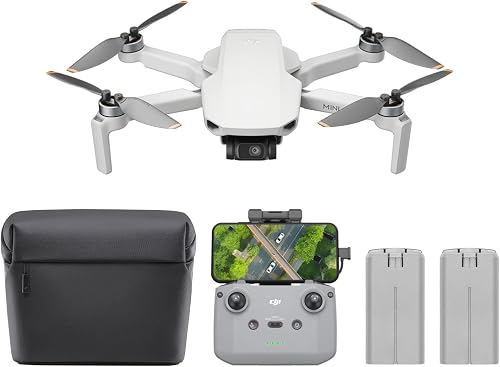 |  |  |  |  |  | 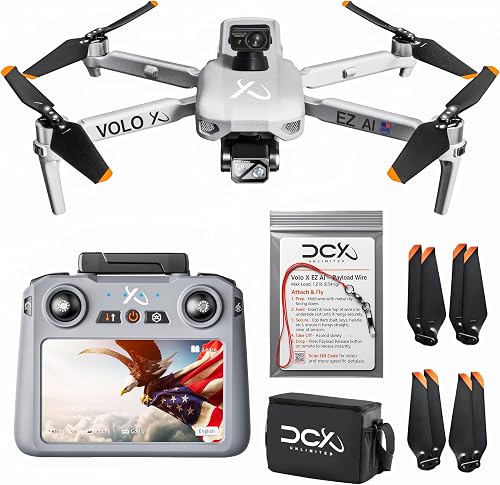 |  |  |  |
|---|---|---|---|---|---|---|---|---|---|---|
| Product | DJI Mini 4K Combo | DJI Neo | Holy Stone HS360S | YIKKEON 3-Axis Gimbal | GPS 4K Screen Drone | Ruko F11PRO 2 | DCX Volo X EZ | CHUBORY 4K Drone | GPS 4K Auto Follow | GPS 4K Screen Controller |
| Brand | DJI | DJI | Holy Stone | YIKKEON | sllcll | Ruko | DCX UNLIMITED | CHUBORY | REDRIE | CHUBORY |
| Best for | Best Overall | Best for Subject Tracking | Best Long Range | Best Flight Endurance | Best Integrated Screen | Best High Resolution | Best Obstacle Avoidance | Best Brushless Motor | Best Lightweight Design | Best Beginner GPS |
| The listing says | Under 249 g, no registration needed 4K resolution with 3-axis gimbal | 135g lightweight design Palm takeoff and landing | Under 250g, no registration needed 4K UHD camera with GalaxyCore sensor | 10,000 feet range with 4.5" HD screen 3-axis gimbal for 4K video | Remote controller with 4.5-inch built-in screen 4K UHD camera with FPV transmission | 3-axis mechanical gimbal for 4K video One-key takeoff, landing, and beginner mode | AI-assisted Follow Me and obstacle avoidance 360° obstacle detection with LiDAR sensors | 2,650 feet control range Brushless motors with 84 minutes flight time | 4K camera with 2-axis gimbal 3 batteries for 50–60 minutes flight time | Remote with 4.5-inch HD display 3,280 FT GPS flight range |
| More information | Check Latest Price on Amazon | Check Latest Price on Amazon | Check Latest Price on Amazon | Check Latest Price on Amazon | Check Latest Price on Amazon | Check Latest Price on Amazon | Check Latest Price on Amazon | Check Latest Price on Amazon | Check Latest Price on Amazon | Check Latest Price on Amazon |
1. DJI Mini 4K Camera Drone Combo
Best for: Reliable, high-quality perimeter monitoring.
The DJI Mini 4K Combo features a 3-axis gimbal that keeps your video steady even when the drone moves. Its ability to handle Level 5 winds means you can fly it on days when lighter drones might struggle to stay on course. Because it transmits video up to 10km, it’s well-suited for checking far corners of a large property.
You don’t need to register this drone with the FAA for recreational use because it weighs under 249 grams. If you plan to fly commercially, check the FAA website to see if your specific mission requires registration or Remote ID.
This model isn’t for people who prefer a built-in screen, as you must use the DJI Fly app on your own smartphone. Since the app isn’t on Google Play, visit the DJI website directly to download the latest version. If you want maximum flight time, choose the 3-battery set for 93 minutes of power rather than the 62-minute 2-battery combo.
Pros
- The camera system provides professional-grade, shake-free footage.
- Strong Level 5 wind resistance.
- Long 10km transmission range.
Cons
- Requires smartphone for app.
- No built-in controller screen.
2. DJI Neo
Best for: Quick, close-range property check-ins.
The DJI Neo is designed for simplicity, allowing for palm takeoff and landing without needing a controller. Its full-coverage propeller guards protect the rotors if you fly near branches or building edges, which is useful for tight spaces. Because it weighs only 135g, you avoid the burden of FAA registration and Remote ID requirements.
This drone is an excellent companion for quick inspections, though it isn’t intended for high-altitude mapping or long-distance flights. If you plan to fly in a windy park, the level-4 wind resistance and stabilization technology keep your 4K footage smooth.
Before your first flight, you must visit the DJI official website to download the Fly app. The Google Play version is currently unavailable, so skipping this step will prevent you from activating the device. If you find the app interface restrictive, use the voice control or mobile app options to maintain flight flexibility.
Pros
- Built-in propeller guards.
- Extremely lightweight design.
- Easy palm takeoff operation.
Cons
- Limited flight range compared to others.
- Requires manual app download for initial setup.
3. Holy Stone GPS Drone with 4K UHD Camera
Best for: Exploring distant property boundaries.
The Holy Stone HS360S offers an impressive 10,000-foot control range, ideal for monitoring expansive land. Its upgraded remote controller connects to your phone with a single data cable, removing the need for a stable WiFi connection during flight. This direct link ensures consistent real-time image streaming even when you’re far from home.
While the 20-minute flight time per battery is shorter than some multi-battery kits, the precise GPS positioning keeps the drone stable during patrols. If the battery runs low or the signal breaks, the automatic Return-Home function brings the craft back to you. This safety feature allows you to explore boundaries without the constant fear of a lost connection.
It isn’t the best choice for users who want to avoid all manual flight. Although it includes beginner modes and optical flow positioning to help you practice, it requires more active piloting than fully autonomous models. If you’re a novice, use the “1-Tap Ascension” or “Spiral Up” modes to let the drone handle the complex maneuvers while you focus on framing your 4K shots.
Pros
- Long 10,000-foot control range.
- Stable GPS flight positioning.
- Direct wired phone connection.
Cons
- Shorter single-battery flight time.
- Requires manual pilot input.
4. 3-Axis Gimbal GPS Drone with 4K Camera YIKKEON Drone
Best for: Extended sessions without battery swaps.
The YIKKEON 3-Axis Gimbal stands out by offering 90 minutes of total flight time using three included batteries. The dedicated 4.5-inch HD screen on the remote allows you to see exactly what the camera sees without draining your phone’s battery.
This setup is ideal for those who want to maximize flight time without managing complex mobile device connections. If you plan to fly in remote areas, remember that no charger is included in the box. You must source a compatible charger before your first trip to avoid being grounded.
It isn’t for users who prefer a minimalist, pocket-sized drone. The controller and extra batteries add significant bulk to your gear bag compared to phone-tethered models. However, the brushless motors and 3-axis gimbal provide the stability needed for professional-looking 4K footage.
Because the drone weighs under 249g, it avoids FAA registration requirements for most users. If you’re a beginner, use the Auto Return and Follow Me modes to master flight mechanics without risking your equipment.
Pros
- Total 90-minute flight time.
- Large built-in controller screen.
- The camera system ensures smooth, professional-grade video capture.
Cons
- No charger included.
- Larger controller footprint.
5. GPS Drone with 4K Camera
Best for: Distraction-free aerial inspections.
The GPS 4K Screen Drone features a controller with a built-in 4.5-inch screen, meaning you can fly without connecting your phone. This setup avoids interruptions from incoming calls or messages, allowing you to focus entirely on your patrol. Because the system is self-contained, you avoid the common mistake of losing signal due to background app interference or phone battery drain.
The drone is specifically noted for its ability to inspect hard-to-reach areas like rooftops, exterior walls, or drainage ditches. Use the 90° adjustable lens to capture specific angles during these flights. If you’re flying outdoors, ensure you’re in GPS mode to utilize the one-click, low battery, or signal-loss return-to-home features.
If you’re flying indoors, you must switch to optical flow mode to maintain stable hovering. While the drone weighs under 249g to avoid complex registration requirements, remember that the integrated screen controller is heavier than a standard mobile phone holder. This trade-off is necessary for the immersive, distraction-free experience this specific model provides.
Pros
- Integrated screen controller.
- No phone connection required.
- Good for rooftop inspections.
Cons
- Heavier controller unit.
- Fixed 60-minute battery total.
6. Ruko F11PRO 2 Drone with 6K Camera
Best for: High-resolution estate monitoring.
The Ruko F11PRO 2 captures 6K photos and 4K video, providing high detail for inspecting fences or property lines. Its 3-axis mechanical gimbal ensures that even when the wind picks up, the footage remains smooth and usable.
With a 10,000-foot transmission range, it’s a strong choice for large ranches or estates. If you’re flying over wide, open spaces, the GPS Auto Return-to-Home feature provides a safety net by triggering automatically if your battery runs low or the signal drops.
If you prioritize simple flight over professional stability and long-range reach, focus on models that offer intuitive handling. Use the included Beginner Mode if you feel overwhelmed by the controls; it limits the flight envelope to help you gain confidence.
Pros
- High 6K photo resolution.
- The camera is mounted on a mechanical stabilizer for smooth video.
- 10,000-foot transmission range.
- 70-minute total flight time.
Cons
- Higher learning curve for features.
- Larger frame size.
7. DCX Volo X EZ AI Drone
Best for: Flying in tight, complex environments.
The DCX Volo X EZ uses LiDAR sensors for 360-degree obstacle avoidance, which helps prevent collisions in complicated areas. This makes it a safer choice if you’re flying near trees, poles, or building structures.
The 47-minute flight time per battery is a major benefit for those who want to minimize downtime. If you find your flight time dropping significantly, check that you’re using the 6000mAh battery rather than the older 5000mAh version.
It isn’t for those who want a “plug and play” experience. You must remove the protective foam padding from under the camera before your first flight. Leaving this padding in place restricts gimbal movement and will cause permanent mechanical damage.
Pros
- 360-degree obstacle avoidance.
- Long-lasting 6000mAh battery.
- Includes LED spotlight.
- No geofencing or height limits.
Cons
- Requires gimbal padding removal.
- Heavier battery design.
- Requires manual setup for gimbal safety.
8. CHUBORY 4K Drone with Camera
Best for: Reliable, quiet motor performance.
The CHUBORY 4K Drone utilizes brushless motors, which are quieter and more efficient than standard motors. Its 84-minute total flight time, powered by three included batteries, is excellent for covering large properties in a single session.
If you value portability, this model weighs less than 249g. This specific weight threshold means you avoid the regulatory burden of official drone registration. Always check your local flight path requirements before takeoff to ensure compliance.
The drone is highly beginner-friendly, featuring automatic hover, optical flow positioning, and one-key takeoff. Use the 120° wide-angle camera to switch between the front view and the bottom terrain perspective for better navigation.
While the 2,650-foot control range is a significant upgrade over entry-level models limited to 250 feet, it remains a mid-range distance. If you intend to film vast landscapes beyond this radius, the connection may drop. Stick to open areas to maintain a clear signal.
Pros
- Quiet brushless motor design.
- Long 84-minute total flight.
- Easy one-key operation.
Cons
- Mid-range control distance.
- Limited advanced navigation features.
9. Drones with Camera for Adults 4K
Best for: Versatile landscape photography and patrol.
The GPS 4K Auto Follow uses a 2-axis gimbal to stabilize your footage while moving. It includes intelligent modes like route planning, which is useful for setting a specific patrol path around your property. You can also use the GPS Follow mode to track subjects automatically or the Fly Around feature to orbit a specific point.
This model is a great all-rounder for beginners who want to learn advanced flying techniques. It isn’t for professional cinematographers who require advanced mechanical stabilization for the absolute smoothest footage possible. If you’re flying in open areas, the 500m signal range provides plenty of room to maneuver. However, if you lose signal or the battery drops, the built-in GPS triggers an automatic return to home.
Pros
- Useful route planning mode.
- Includes extra batteries.
- Lightweight under 249g.
Cons
- Only 2-axis gimbal stabilization.
- Moderate signal range.
10. GPS Drone with EIS 4K Camera
Best for: Beginners wanting an all-in-one package.
The GPS 4K Screen Controller includes a 4.5-inch HD display right on the remote, which simplifies the setup process significantly. You avoid the common mistake of fumbling with a separate smartphone mount or struggling with app connectivity issues during takeoff. It also comes with a 32GB SD card, so you can start recording your property patrol immediately.
This drone is very stable thanks to its GPS, making it easy to fly even if you have never touched a drone before. If you’re flying in a confined space, switch to Indoor Mode to maintain control. Otherwise, stick to open areas where the GPS signal remains strong to ensure the auto-return feature functions reliably.
The screen is non-touch, so rely on the physical controls to navigate your settings. While the 3280-foot range is impressive, always monitor your battery levels; the drone is designed to return home automatically when power runs low.
Pros
- Controller with built-in screen.
- Includes 32GB SD card.
- Stable GPS flight modes.
Cons
- Non-touch screen display.
- Best suited for outdoors.
Choosing the Best Perimeter Patrol Drone with Camera
Does the drone need FAA registration?
In the United States, drones weighing less than 250 grams don’t require FAA registration for recreational use. Every model listed here—including the DJI Mini 4K, DJI Neo, and various Holy Stone or YIKKEON units—falls under this 249g threshold. This exemption simplifies your setup process significantly.
However, don’t assume this weight rule is a permanent pass for all scenarios. If you transition from recreational flying to commercial work, registration becomes mandatory regardless of how light the drone is. Always check the official Federal Aviation Administration website before your first flight. If you fly in restricted airspace, weight doesn’t grant you immunity from local regulations.
Is a built-in screen better than a phone app?
A dedicated screen controller is the superior choice for property patrol because it eliminates digital interference. When you rely on a smartphone, incoming calls, messages, or notifications can crash your flight app or obscure your view of the terrain. A dedicated built-in screen provides a stable, distraction-free feed that keeps your focus entirely on the flight path.
Conversely, phone-based apps often utilize your mobile device’s high-resolution display, which can offer better color accuracy and clarity. If your primary goal is professional-grade photography where spotting fine details is critical, the phone app is usually superior. If you prioritize a “grab-and-go” experience where you need to be in the air within seconds, choose the dedicated screen controller.
How much flight time do I really need?
[0] For effective perimeter patrol, aim for extended total flight time. Packages that include three batteries, such as those for the YIKKEON 3-Axis Gimbal or the CHUBORY 4K, offer the best value. These setups allow you to land, swap a power pack, and return to the air very quickly.
Be aware that manufacturers calculate flight times in ideal, windless conditions. Real-world factors like Level 5 winds or aggressive maneuvering will drain your battery faster than the stated maximum. If you’re patrolling a large estate, always factor in a 20% buffer for your return-to-home sequence.
Frequently Asked Questions
Can I fly these drones in the rain?
Most consumer drones are not waterproof and should never be flown in rain, snow, or heavy fog. If your drone gets damp, land it immediately, power it down, and remove the battery. Let it air dry completely in a warm, dry place for a full day before attempting to power it on again.
What happens if the drone loses signal?
Most GPS-enabled drones in this guide feature an automatic Return-to-Home (RTH) function that triggers if the signal is lost. The drone uses GPS data to fly back to its takeoff point and land safely. Always ensure your drone has a strong GPS lock before takeoff to ensure this function works as intended.
Are these drones easy to repair?
Repairing consumer drones is difficult because parts are often proprietary and integrated. Manufacturers typically recommend replacing the unit or using professional service rather than DIY fixes. To avoid repairs, use propeller guards, check flight paths for obstacles, and store the drone in its carrying case when not in use.
Is the simplest drone on the list enough?
For basic perimeter monitoring, a simple model like the DJI Neo is often sufficient. Its portability and ease of use make it ideal for quick, daily checks of your property. If you do not need to map large fields or fly long distances, a reliable, compact drone is often the best choice.
Closing
For most users, the DJI Mini 4K Combo remains the best all-around choice due to its balance of 3-axis gimbal stability, Level 5 wind resistance, and 10km transmission range. If you prefer a simpler experience that avoids smartphone app dependencies, the GPS 4K Screen Controller models provide a dedicated 4.5-inch display for real-time monitoring.
Before your first flight, you must remove any protective foam padding from under the camera gimbal. Leaving this in place restricts movement and will likely damage the motor. Once clear, find an open area to practice basic takeoff and landing sequences.
If you’re flying a model like the DCX Volo X EZ, utilize the 360° obstacle avoidance to navigate tighter spaces safely. For those using drones with GPS, always allow the craft to acquire a strong satellite signal before takeoff. This ensures the Return-to-Home function can accurately trigger if the battery hits a critical level or the signal drops.
Always check local wind conditions against your drone’s rating. If you’re flying in an environment exceeding your drone’s stability limits, you risk erratic flight or loss of control.


