
Finding the best drone for spotting fish depends on where you plan to look. Some users need to scan wide coastal areas from the sky, while others need to see directly into the water for a closer look at structure or schools. The main factors deciding your choice are the flight range, the camera quality, and whether you need an aerial view or a submersible tool. The SwellPro Fisherman MAX and the FIFISH V-EVO represent the two main ways to approach this, as one covers the surface and the other explores the depths.
All 10 products side by side — scroll sideways to see every column.
| Top Pick | Best for Bait Placement | Best for Vertical Filming | Best for Night Scouting | Best for Thermal Imaging | Best for Simple Scouting | Best for Extended Sessions | Best for High Resolution | |||
| Preview |  |  |  |  |  |  |  |  | 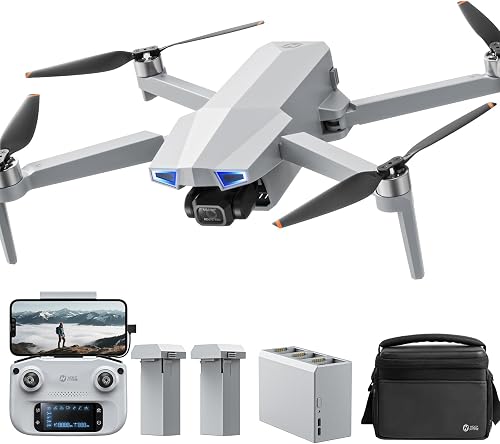 |  |
|---|---|---|---|---|---|---|---|---|---|---|
| Product | SwellPro Fisherman MAX | SwellPro Fisherman FD3 | DJI Mini 5 Pro | DJI Air 3S | Autel Robotics EVO II | FIFISH V-EVO | Potensic ATOM 4K | DJI Mini 3 | Holy Stone HS790 | Bwine F7MINI |
| Brand | Generic | SwellPRO | DJI | DJI | Autel | FIFISH | Potensic | DJI | Holy Stone | Bwine |
| Best for | Top Pick | Best for Bait Placement | Best for Vertical Filming | Best for Night Scouting | Best for Thermal Imaging | — | Best for Simple Scouting | — | Best for Extended Sessions | Best for High Resolution |
| The listing says | Dives up to 49ft 1080p f/1.6 camera for photos and videos | 4K video at 30 fps with 5-inch display 4.4 lb bait capacity | Foldable design with 42GB internal storage 1-inch CMOS sensor with 4K/60fps HDR video | 1" CMOS primary camera 4K/60fps HDR video with 14 stops dynamic range | 15km image transmission range 640×512@30 fps thermal imaging sensor | 4K 60fps camera Removable SD card | 4K/30fps video with 3-axis gimbal 6 KM transmission range | Weighs under 249 g 4K HDR video with dual native ISO | 4K/30FPS video with 3-axis gimbal 9KM transmission range | Weighs under 249g 48MP 1/2" CMOS sensor |
| More information | Check Latest Price on Amazon | Check Latest Price on Amazon | Check Latest Price on Amazon | Check Latest Price on Amazon | Check Latest Price on Amazon | Check Latest Price on Amazon | Check Latest Price on Amazon | Check Latest Price on Amazon | Check Latest Price on Amazon | Check Latest Price on Amazon |
1. Swellpro Fisherman MAX Heavy Lift Fishing Drone with 4K Camera
Best for: Someone who needs a heavy-duty drone for surf fishing.
This drone is built for the specific demands of carrying bait and terminal tackle over long distances. It features a high 3.5kg bait release capacity, which allows you to deploy heavy rigs that smaller drones simply can’t handle. The IP67 waterproof design is crucial for those who fly near saltwater, as it protects the internal components from spray and accidental contact with the ocean.
Because it’s designed for heavy lifting, it’s less agile than smaller, lighter models. If you’re looking for a compact travel drone for casual scouting, this isn’t the right choice due to its specialized build and size.
Good if:
- You need to carry heavy bait rigs.
- You fly in wet or coastal conditions.
- You require a waterproof airframe.
Skip it if:
- You want a compact drone for hiking.
- You prioritize high-speed aerial photography.
2. SwellPro Fisherman FD3 Advanced Fishing Drone with Bait Release
Best for: A dedicated angler who needs reliable bait placement.
The FD3 offers a balance between flight capability and utility, supporting up to 4.4 lb of bait. It includes a 4K camera with a live view on the controller, which helps you see exactly where you’re dropping your line. The inclusion of GPS hover and various return-to-home modes adds a layer of safety when flying over open water.
If you’re flying in wind, keep the 30 mph limit in mind. Exceeding this speed risks the stability of your rig. While the drone supports a 0.8 mile range, your actual distance varies based on the weight of your multi-hook rig or the strength of a headwind. Always check your battery levels before pushing toward the maximum limit.
This model is a dedicated tool for fishing, so it lacks some of the advanced AI tracking features found in consumer-focused photography drones. It isn’t the best option for someone who wants a versatile drone for both family events and fishing. Use the one-axis tilt camera to monitor your route, but don’t expect the smooth, cinematic stabilization required for professional video production.
Good if:
- You need precise visual bait placement.
- You require a 0.8 mile range.
- You fly in windy, coastal environments.
Skip it if:
- You want an all-purpose cinematic drone.
- You’re a first-time pilot without fishing experience.
- You need a controller that’s fully waterproof, as the controller is only rated IP54 compared to the IP67 aircraft.
3. DJI Mini 5 Pro Fly More Combo Plus with DJI
Best for: Creators who want top-tier image quality in a small package.
The 1-inch CMOS sensor captures 4K/60fps HDR video, making it excellent for identifying small details from above. Its omnidirectional obstacle sensing, powered by forward-facing LiDAR and vision sensors, makes it significantly safer to fly near trees or rocky shorelines. The gimbal’s 225-degree rotation allows for unique vertical filming angles that other drones can’t reach.
This drone isn’t built to carry heavy bait or tackle, so it’s strictly for scouting and filming. If your primary goal is to drop lines rather than record high-end footage, you’ll find its lack of payload capacity limiting.
The 42GB of internal storage ensures you can keep shooting even if your memory card fills up. If you plan to fly for long sessions, use the Intelligent Flight Battery Plus to reach the 52-minute flight limit. If you notice the DJI Fly app is missing from your app store, don’t search third-party sites. Download the latest version directly from the official DJI website to ensure full compatibility.
Good if:
- You need professional-grade 4K/60fps video.
- You want a lightweight, portable device.
- You fly in areas with many obstacles.
Skip it if:
- You need to carry fishing bait.
- You’re on a strict budget for accessories.
- You prefer using standard app stores for your software updates.
4. DJI Air 3S Fly More Combo
Best for: Long-range scouting along large coastlines or lakes.
With a 20km transmission range, this drone allows you to survey expansive stretches of water without losing your signal. The 1-inch CMOS sensor is tuned for low-light performance, which is helpful during the early morning or late evening hours when fish are often most active. Its intelligent return-to-home algorithm provides reliable navigation when flying at great distances.
If you’re flying in environments with weak GPS, rely on the upgraded return-to-home algorithms to calculate the optimal route back to your home point. This feature is a vital safety net when operating at the edge of your transmission range. While the drone is capable, remember that the 65W portable charger is sold separately. Neglecting to acquire this specific charger will leave you unable to charge your three flight batteries efficiently in the field.
This drone is a significant investment in technology that exceeds the needs of a casual weekend fisher. It isn’t for someone who only needs to scout a small pond or a nearby pier. Use the wide-angle panorama mode for expansive coastal views, but switch to the medium telephoto setting if you need to minimize distortion on specific targets.
Good if:
- You need to scout over long distances.
- You fly during dawn or dusk.
- You want advanced, omnidirectional nightscape obstacle sensing.
Skip it if:
- You only fish in small, local areas.
- You prefer a simpler, entry-level flight system.
- You’re unwilling to purchase a separate 65W charger.
5. Autel Robotics EVO II Dual 640T Enterprise V3
Best for: Professionals who need thermal imaging to locate fish.
The thermal imaging sensor is the standout feature here, as it can detect temperature differences that might indicate fish activity or water conditions. Its 640×512 resolution at 30 fps, paired with a 13mm lens and 16x digital zoom, allows for precise subject recognition at a distance. The 15km transmission range and the 7.9-inch V3 smart controller, which offers four times the brightness of standard mobile devices, ensure you can interpret data clearly even in direct sunlight.
This is a complex, enterprise-level tool that requires a learning curve to master. It isn’t recommended for recreational users who want a “ready-to-fly” experience for simple fishing trips. If you’re operating in temperatures between -10℃ and 40℃, this airframe provides 42 minutes of flight time. However, if your mission doesn’t require advanced thermal monitoring or modular attachments like the included loudspeaker, spotlight, or beacon, the technical overhead of the V3 system will likely outweigh its benefits.
Good if:
- You need thermal data for spotting or precise animal positioning.
- You require professional-grade transmission ranges up to 15km.
- You need to mount extra accessories like a spotlight for night operations.
Skip it if:
- You want a simple, recreational-only drone.
- You don’t need thermal imaging capabilities.
- You’re looking for a lightweight device, as this model uses larger propellers and carbon fiber arms for industrial stability.
6. 【2025 New】FIFISH V-EVO 4K60FPS Underwater Drone with Robotic Arm
Best for: Seeing exactly what is happening beneath the surface.
Unlike aerial drones, this is an underwater ROV that dives up to 330ft. Its 5000-lumen lights and 4K camera allow you to see underwater structure and fish behavior directly. The 360-degree mobility means you can navigate around reefs or sunken logs with precision. Because the design is hydrodynamic and fluid, it encounters minimal resistance against currents, which helps you maintain stability while capturing footage.
This device can’t fly, so it’s entirely dependent on a tethered connection to your controller. It isn’t suitable for scouting large areas of water quickly, as it’s limited by its underwater speed and the length of its cable. If you’re operating in dark or turbid environments, rely on the 5500K white LED lights to restore true colors.
The removable SD card makes managing your files easier after a dive. If you find the controls difficult, remember that this unit has high operational requirements. Reach out to customer service if you encounter issues; they guarantee a response within 24 hours.
Good if:
- You need to inspect underwater structures.
- You want to film fish up close.
- You need powerful integrated lighting.
Skip it if:
- You need to scout from the air.
- You want a portable device for long-distance travel.
- You’re working in currents that exceed the drone’s power.
7. Potensic ATOM 4K GPS Drone
Best for: Beginners who want a simple, portable scouting tool.
This drone is compact and falls under the weight threshold that simplifies registration requirements in many areas. It offers a 6km transmission range and a 3-axis gimbal that keeps your video steady, even in moderate winds. The included fast-charging hub is a convenient touch for those who want to get back in the air quickly.
It lacks the specialized lifting power or advanced sensors of other models. It’s a tool for hobbyists, not for those who need professional-grade optics or heavy-duty performance.
Good if:
- You’re a beginner pilot.
- You want a lightweight, foldable design.
- You need a fast-charging battery system.
Skip it if:
- You need to carry bait or heavy gear.
- You require long-range performance beyond 6km.
8. DJI Mini 3 With DJI RC
Best for: Beginners who want reliable, stable aerial footage.
The Mini 3 is a solid, entry-level choice that provides 4K HDR video and good wind resistance. Its true vertical shooting mode is great for social media content. It’s designed to be easy to use, with features like auto-takeoff and precise hovering that help new pilots feel confident.
You can fly without FAA registration or Remote ID if you stay under 249g for recreational use. If you choose the Intelligent Flight Battery Plus to extend flight time to 51 minutes, the drone exceeds this weight limit. You must then register the aircraft to remain compliant.
The 3-axis mechanical gimbal and Level 5 wind resistance ensure smooth 4K imagery even in breezy conditions. Brushless motors provide enough power to launch at altitudes up to 4,000 meters. While it offers 10km of HD video transmission, it lacks the advanced obstacle avoidance found in higher-tier models.
Good if:
- You’re new to drone flying.
- You want a lightweight, easy-to-carry drone.
- You need stable 4K video.
Skip it if:
- You need advanced obstacle sensing.
- You plan to fly in complex, obstacle-heavy environments.
- You require the absolute maximum range available in the DJI lineup.
9. Holy Stone HS790 6K Photo Drone with Camera
Best for: Extended flight sessions on a budget.
This drone offers a total flight time of 60 minutes using dual modular batteries, perfect for long scouting sessions. The 9km transmission range is impressive for this category. Integrated GPS, Return-to-Home, and One-Key controls make it safer for beginners to manage. Its dedicated night mode enhances visibility for twilight flights.
The included Smart PD Charging Hub doubles as a power bank, which helps if you’re flying away from a wall outlet. You also gain FAA compliance immediately through the built-in Remote ID, eliminating the need for external modules.
It’s a feature-rich drone, but it lacks the refined software and build quality found in premium brands. If you require the absolute highest cinematic fidelity for professional work, you’ll notice the difference in sensor performance. Use Beginner Mode to practice your flight paths; once you master the altitude hold and headless mode, you can unlock full manual controls.
Good if:
- You want long total flight times.
- You need a long transmission range.
- You fly during twilight hours.
- You need built-in Remote ID compliance.
Skip it if:
- You want a premium, high-end camera sensor.
- You’re a professional content creator.
- You prioritize the most refined flight software over raw feature counts.
10. Bwine F7MINI 4K Video 8K Photo Drones with Camera
The 3-axis gimbal and 8K photo capability make this a strong contender for those who want to capture high-quality images of their fishing spots. Its brushless motors counteract movement in real-time, keeping footage steady even when the drone tilts or rotates.
The extended total flight time, provided by a multi-battery system, is a major advantage for long days on the water. Because these batteries support PD 3.0 fast charging, you can replenish power quickly between flights.
If you fly in coastal areas, the 31mph top speed provides the necessary power to maintain stability during blustery conditions. This wind resistance is critical for protecting your investment during mountain flights or farm patrols where gusts are unpredictable.
It’s heavier on features than some other beginner drones, which might be overwhelming if you just want a simple experience. If you prioritize a minimalist setup, the complex interface may feel like a distraction. However, the 120dB locator buzzer serves as a vital safety net. If you lose your drone in dense brush or tall grass, this high-decibel alert allows you to track it down quickly.
Good if:
- You need high-resolution 8K photos.
- You want long total flight times.
- You fly in moderately windy conditions.
Skip it if:
- You prefer a minimalist flight interface.
- You aren’t interested in high-resolution photography.
Where These Overlap
Many of the aerial drones listed here, such as the DJI Mini 3, Potensic ATOM 4K, and Bwine F7MINI, occupy a similar space for the average hobbyist. They all prioritize portability, ease of use, and decent 4K video quality. If you’re a casual angler, the choice between these often comes down to personal preference regarding the controller interface or the specific app experience. The differences in flight time or transmission range are often negligible for someone just scouting a local lake or beach.
However, a clear divide exists between these general-purpose drones and the specialized units. The SwellPro Fisherman series is fundamentally different because it’s built to carry weight; it’s a tool for deploying gear, not just for looking. If your goal is to drop bait or terminal tackle, look for a drone with a specific weight capacity, like the 4.4 lb (2 kg) limit on the SwellPro Fisherman FD3.
Similarly, the FIFISH V-EVO is in a different league entirely, as it’s a submersible that can’t fly at all. It’s designed for underwater observation, using 5000-lumen headlights to navigate dark or turbid environments. If you need to inspect structures or find fish beneath the surface, you must choose a submersible rather than an aerial unit.
The Autel Robotics EVO II sits in its own category, as its thermal imaging capabilities are geared toward professional or high-intensity scouting that goes beyond the capabilities of consumer-grade optics. Use this if you’re performing search and rescue, firefighting, or precise animal positioning where standard cameras fail. When choosing, decide if you’re an angler who needs to transport gear, a scout who only needs to see from the air, or a professional requiring thermal data and specialized sensors.
Still Not Sure?
How much scouting time do I actually need?
If you’re planning to spend a full day on the water, you need a drone with long battery life or a multi-battery kit. Drones like the Bwine F7MINI and Holy Stone HS790 offer long total flight times that reduce “range anxiety.” However, if you only need to check a few spots near your boat or dock, a shorter flight time is perfectly fine. Think about how many hours you spend fishing and choose a drone that matches your pace. For the longest flight times, look at the Bwine F7MINI.
Do I need to carry bait or just look?
This is the most important question for any angler. If you need to drop a line, you must choose a drone with a dedicated bait release mechanism and the power to carry the weight, such as the SwellPro Fisherman MAX. If your goal is purely to identify where the fish are hiding, any of the aerial drones will work, but you should prioritize camera quality and transmission range. Choosing a drone that lacks payload capacity for fishing will lead to frustration. If you need to carry gear, choose the SwellPro Fisherman MAX.
What is the legal side of flying?
Before you buy, you must consider the regulations in your area. Many countries have strict rules regarding drone weight, registration, and where you can fly. The Federal Aviation Administration provides clear guidelines on Remote ID and registration requirements for recreational pilots. Always check these rules before your first flight to ensure you’re compliant. If you want to avoid complex registration, look for drones under 249g like the Potensic ATOM 4K.
Choosing the right drone means matching your fishing habits to the hardware. For harsh coastal bait deployment, the SwellPro Fisherman MAX is the most capable tool. For scouting and capturing footage, a lightweight option like the DJI Mini 3 is ideal. Assess your primary goal to select the best fit for your next trip.


