
Choosing the best remote control planes for adults depends on your experience level and whether you prioritize the advanced flight control of the Fms 1300MM Super Cub for realistic training or the agile, aerobatic-focused design of the Brushless 4 Channel Corsair. These models differ in motor configuration and stabilization, dictating whether they are best suited for open fields or smaller areas.
All 10 products side by side — scroll sideways to see every column.
| Top Pick | Best for Short Takeoffs | Best for Aerobatics | Best for High Speed | Best for Beginners | Best for Long Flights | |||||
| Preview | 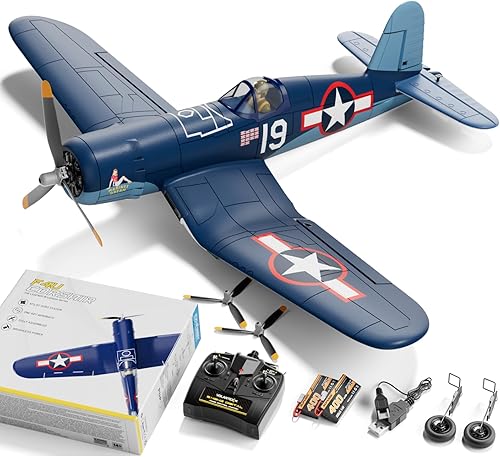 |  |  |  |  | 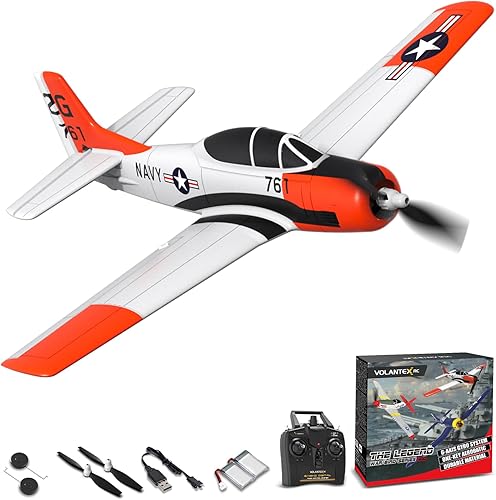 |  |  |  |  |
|---|---|---|---|---|---|---|---|---|---|---|
| Product | Brushless 4 Channel Corsair | Fms 1300MM Super Cub | P-40 Warhawk RC Plane | DEERC F35 Thunderbirds | P51 Mustang RC Plane | Volantexrc T28 Trojan | Volantexrc 4CH Glider | DEERC F-16 Style Plane | B25 Mitchell RC Plane | DEERC EDF Remote Plane |
| Brand | LEAMBE | Fms | LEAMBE | DEERC | LEAMBE | volantexrc | volantexrc | DEERC | LEAMBE | DEERC |
| Best for | Top Pick | Best for Short Takeoffs | Best for Aerobatics | Best for High Speed | Best for Beginners | Best for Long Flights | — | — | — | — |
| The listing says | Three levels of flight control assistance High-performance brushless motor | Ready-to-Fly 1300MM (52") Piper PA-18 Reflex V3 gyro auto-levels wings | Simple operation and easy assembly Up to 15 minutes flight time | 7400KV1104 brushless motor Realistic F-35 Thunderbirds design | Lightweight elastomer foam construction Three flight modes for all levels | Xpilot gyro stabilization system Three-level flight control assistance | Xpilot gyro stabilizer system Three levels of flight control assistance | Authentic F-16 scale paintwork 4-channel control with 6-axis gyro | Differential thrust steering Up to 40 minutes total flight time | Twin-ducted fan design Two 7.4V 20C LiPo batteries |
| More information | Check Price on Amazon | Check Price on Amazon | Check Price on Amazon | Check Price on Amazon | Check Price on Amazon | Check Price on Amazon | Check Price on Amazon | Check Price on Amazon | Check Price on Amazon | Check Price on Amazon |
1. Brushless 4 Channel RC Plane F4U Corsair 500mm Remote Control
Best for: Someone who wants high performance and scale realism in one package.
This plane is built for pilots who want a mix of power and looks. It’s designed for those who appreciate fine details, like a 4-bladed propeller and a simulated dashboard, making it feel more like a real aircraft than a toy.
The triple-level flight control assistance is the key feature here. It allows you to start with full stability and slowly move to manual control as your skills improve. If you’re a beginner, keep the 6-axis gyro engaged to maintain steady flight. Once you master basic maneuvers, switch to the manual mode to unlock full aerobatic potential. This plane isn’t for those who want a simple, unpowered glider, as the motor is designed for active, energetic flight rather than slow, passive soaring.
Remember that the 656 ft range is your hard limit. If you fly beyond this, you risk losing the signal, though the plane includes alarms to warn you before the battery dies. If you’re flying in a small club, the anti-interference technology ensures you can fly alongside others without your controls crossing.
Good if:
- You want a highly detailed scale replica.
- You need a powerful brushless motor for speed.
- You enjoy performing aerobatic stunts.
Skip it if:
- You’re looking for a slow-flying, long-endurance glider.
- You have no interest in scale detail or aesthetics.
2. Fms 1300MM PA-18 Super Cub RC Plane & RC Airplane
Best for: A serious hobbyist who wants a professional-grade trainer.
This plane offers a more substantial flying experience due to its 1300mm wingspan. It uses the Reflex V3 stabilization system, which is designed to handle wind gusts and keep the plane level, providing a solid platform for learning. You should keep the gyro active while learning the basics, but flip it off once you feel comfortable with manual control to test your true skill.
The inclusion of functional flaps is a major upgrade, allowing for the short takeoffs and landings that define its legendary real-world counterpart. If you’re flying on grass, dirt, or gravel, deploy the flaps to shorten your ground roll and clear obstacles quickly.
The heavy-duty construction, including CNC metal landing gear and large tires, means it can handle rougher runways better than smaller, lighter models. The listing doesn’t mention if the plane fits in a backpack.
Good if:
- You want a stable, large-scale training aircraft.
- You fly on grass, dirt, or uneven terrain.
- You value realistic features like functional flaps.
Skip it if:
- You need something highly portable for travel.
- You prefer a small, agile jet-style aircraft.
- You lack the storage space for a 1300mm airframe.
3. P-40 Warhawk RC Plane
Best for: Pilots who want to master aerobatics with a compact plane.
The P-40 Warhawk is focused on agility and ease of use. It features the Xpilot stabilization system, which keeps the flight steady even for those still learning the ropes. The “one-key aerobatic” function is a standout, allowing you to trigger loops and rolls automatically. You simply press the switch and pull the stick to execute these stunts, which is great for learning the timing of complex maneuvers.
The EPP foam construction makes it quite durable against the occasional hard landing. If you’re a beginner, use the three-level flight control system to gradually build your skills. Rely on the stabilization assistance while you’re learning; once you feel confident, you can transition to manual control.
This plane isn’t for those who need a long-range flyer. Its power system is optimized for tight, energetic aerobatics within a 656-foot radius rather than long-distance exploration. If you find the plane drifting during a turn, toggle the stabilization system back on to level the wings instantly.
Good if:
- You want an easy way to perform aerobatics.
- You prefer a compact, crash-resistant design.
- You’re a beginner looking for stable flight assistance.
Skip it if:
- You want to fly in wide-open spaces at long distances.
- You prefer a larger, more imposing scale model.
- You require more than 15 minutes of flight time per battery charge.
4. DEERC F35 Thunderbirds Brushless 4 Channel RC Plane
Best for: Adrenaline junkies who love the speed of an EDF jet.
This model is all about power and visual impact. The 7400KV brushless motor provides the thrust needed for advanced maneuvers like mirror flight and falling-leaf stunts. It’s a more demanding plane that rewards precise inputs, making it an excellent choice for a pilot who has moved past the basic trainer stage.
The ducted fan system provides a realistic jet sound and look that propeller planes lack. It isn’t for a complete beginner, as the high power-to-weight ratio and speed require quick reflexes and enough space to maneuver safely without hitting obstacles.
If you’re struggling to connect the remote, check the battery cover first. You must press the power switch and wait for the distinct beeping sound before closing the cover to ensure a stable link.
You can launch this jet by hand or via a runway. If you choose a horizontal takeoff, ensure you have at least eight meters of clear space to taxi. Use the lower speed settings to practice your orientation before attempting high-speed aerobatics.
Good if:
- You want the speed and sound of a jet.
- You enjoy advanced, high-precision aerobatics.
- You want a sleek, modern fighter jet look.
Skip it if:
- You’re a first-time pilot with no experience.
- You fly in small, confined areas.
5. P51 Mustang RC Plane
Best for: Beginners who want a forgiving and easy-to-learn aircraft.
The P51 Mustang is designed to be as approachable as possible. It features a lightweight elastomer foam body that’s flexible and damage-resistant. The three flight modes—beginner, intermediate, and experienced—ensure that you can grow your skills at a pace that feels comfortable rather than overwhelming.
The propeller saver technology is a clever addition, as it pops the propeller off during an impact to prevent motor damage. If the propeller detaches, simply snap it back into place to resume flying. This plane isn’t for an advanced pilot looking for extreme 3D stunts or high-speed jet performance, as it’s tuned more for stability and reliable, steady flight.
The Xpilot gyro stabilization system provides self-stabilization, which is essential for keeping the plane level during your first flights. You have a 12-minute window of flight time per charge, and the 2.4Ghz radio control maintains a reliable connection within 656 feet.
If you’re flying in winds, stick to the beginner mode to let the gyro system compensate for gusts. Switch to experienced mode only once you have mastered basic turns and steady level flight.
Good if:
- You’re learning to fly for the first time.
- You want a durable plane with propeller protection.
- You prefer a classic, iconic aircraft design.
Skip it if:
- You’re an advanced pilot seeking high-speed performance.
- You want to perform complex, aggressive 3D maneuvers.
6. Volantexrc T28 Trojan
Best for: Those who want a reliable, easy-to-maintain trainer.
The T28 Trojan is a classic trainer design that focuses on durability and ease of flight. It uses the Xpilot gyro stabilizer to provide self-righting capabilities, which keeps the plane level during your first flights. Its gearbox setup is specifically tuned for efficiency, allowing for flight times up to 20 minutes on a single charge.
The assembly is minimal, making it a great “out of the box” experience. You can be airborne within one minute of opening the package. The 4-channel control provides full authority over the plane, including ailerons for banking.
Use the three-level flight control system to match your current skill. Select the beginner level for full assistance, switch to intermediate for partial help, or choose the expert setting for manual control as you progress. If you’re flying in a group, the 2.4Ghz radio system offers a 656-foot range with anti-interference technology, allowing you to fly alongside friends without signal loss.
It isn’t for someone who wants the raw speed of a jet. The T28 is designed for scale-like flight and training rather than high-speed passes. If you find the plane struggling to climb, you’re likely in expert mode without enough throttle; switch back to beginner mode to let the gyro stabilize your altitude.
Good if:
- You want a long flight time per battery.
- You need a plane that’s easy to assemble.
- You’re looking for a standard, reliable trainer.
Skip it if:
- You want a high-speed, aggressive aerobatic flyer.
- You prefer modern jet designs over WWII trainers.
7. Volantexrc 4CH Glider
Best for: Pilots who enjoy long, relaxing, unpowered flight segments.
This glider stands out because it can fly unpowered for portions of its flight, extending the battery life significantly. The rear-propeller design keeps the motor away from the ground during landings, which is a great way to prevent damage. It’s an ideal choice for someone who finds the constant buzzing of a motor less appealing than the grace of a sailplane.
You can fly continuously for up to 20 minutes by utilizing the rear-thrust design. If you’re a beginner, use the full assist mode to stabilize the plane. If you’re an expert, switch to manual control to perform aerobatics with a single button press.
While it can do aerobatics, it isn’t its primary strength. It isn’t for someone who wants a fast, twitchy, or aggressive fighter-style model, as the glider’s design favors smooth, sweeping turns and long, drawn-out flight patterns.
Good if:
- You enjoy soaring and long flight times.
- You want a plane that’s gentle and easy to fly.
- You prefer a rear-propeller design for protection.
Skip it if:
- You want an aggressive, high-speed fighter jet.
- You prefer the look of a WWII warbird.
- You’re unwilling to provide your own transmitter batteries.
8. DEERC 4CH F-16 Style RC Plane
Best for: Pilots who want a mix of fighter aesthetics and ease of use.
The F-16 style plane is a well-balanced model that brings the fighter jet look to a full-control, 6-axis gyro system. It’s surprisingly durable thanks to the soft rubber nose, which absorbs impact energy during landings. This makes it a great “fearless” flyer for those who want to practice aggressive turns without worrying about the occasional bump.
The 4400KV coreless motor provides plenty of punch for rolls and loops. If you’re a beginner, use the 6-axis gyro to stabilize your climbs before attempting stunts. If you feel the plane becoming unresponsive, check the low-battery alert; it’s your cue to land immediately to ensure a safe return.
This model isn’t for those who want a large-scale, slow-moving trainer. Its flight characteristics are much more suited to active, high-speed maneuvers. If you prioritize scale realism over aerobatic agility, you may find the performance focus here misses your mark.
Good if:
- You want a fighter jet that can take a few hits.
- You enjoy high-speed climbs and aggressive rolls.
- You want the aesthetic of an F-16 fighter.
Skip it if:
- You prefer a slow, stable, and relaxing flying pace.
- You’re looking for a large-scale model with functional flaps.
9. B25 Mitchell RC Plane
Best for: Bomber enthusiasts who want a unique, twin-motor experience.
The B25 Mitchell is a standout because of its twin-motor setup, which uses differential thrust for steering. This makes for a very interesting and smooth flight profile. The scale details, including the military silver paint, make it a beautiful model to watch in the air.
Because it’s a bomber replica, it handles differently than a single-engine fighter. It isn’t for the pilot who wants the most agile, twitchy 3D flyer, as the B25 is designed to look and fly with the steady, heavy presence of a historical bomber.
If you’re a beginner, use the multi-stage XPilot stabilization system to grow your skills. Start in Beginner mode to let the 6-axis gyro correct your flight attitude. Move to Intermediate or Expert only once you have mastered basic turns and landings.
Avoid flying in high winds, even with the gyro system active. While the FLEEX foam and carbon fiber ribs resist damage from minor crashes, the lightweight 400mm frame is best suited for calm days. If you strike an obstacle, the quick-release propellers should pop off to save the internal motors. Always keep the spare propellers and tool in your field kit for quick repairs.
Good if:
- You want a unique twin-motor flight experience.
- You’re a fan of WWII bomber aircraft.
- You appreciate scale detail and realism.
Skip it if:
- You want an extremely agile or fast aerobatic plane.
- You prefer a simple, single-motor setup.
10. DEERC EDF Remote Plane
Best for: Pilots who want the highest thrust-to-weight ratio.
This twin-ducted fan plane is built for power. With a thrust-to-weight ratio of 1:0.9, it provides a very responsive flying experience. The twin-fan setup creates a distinct sound and performance profile that’s very different from standard propeller planes. You can achieve takeoff in just 5-10 meters, whether you prefer a realistic runway start or a quick hand-launch.
This is an advanced model that’s best suited for open spaces. It isn’t for beginners, as the speed and power require a higher level of control. If you choose Mode C for 3D maneuvers or inverted flight, ensure you’re flying at least 30 feet above the ground. This altitude provides the necessary space to recover from complex stunts.
Good if:
- You want top-tier power and performance from two 7.4V 20C LiPo batteries.
- You enjoy the sound and feel of twin-ducted fans.
- You want a high-performance jet for advanced maneuvers.
Skip it if:
- You’re a beginner looking for a slow, stable trainer.
- You fly in small, confined, or restricted spaces.
- You ignore the low battery warning, which risks an unsafe landing or loss of control.
Where These Overlap
Many of the entry-level planes with full-control flight surfaces, such as the P-40 Warhawk, the T28 Trojan, and the P51 Mustang, share identical flight characteristics and core technology. They all lean heavily on Xpilot or 6-axis gyro systems to make flight accessible, and they all offer graduated assistance modes. If you’re choosing between these three, the decision should come down to which aircraft design you find most appealing. They’re close enough in performance that the choice is primarily aesthetic.
The fighter jet models, specifically the F-35, the F-16 style plane, and the twin-ducted fan DEERC, are also grouped closely. They all prioritize speed, thrust, and aggressive aerobatics over the slow, stable flight of the trainers or gliders. If you’re an experienced pilot, these will feel very similar in their handling. The choice here depends on whether you prefer the specific thrust-to-weight ratio of a ducted fan or the raw speed of a brushless motor.
A significant gap exists between these fast jet-style models and the glider or bomber replicas. While the jets demand space for high-speed maneuvers, the glider-style planes use rear-propeller thrust to allow for unpowered soaring. If you fly in a confined area, choose the glider for its ability to extend flight time through gliding. If you want to perform 3D stunts, activate the advanced mode only when flying above 30 feet to ensure you have enough room to recover from the maneuver. Using high-performance modes near the ground is a common mistake that often results in a crash.
Still Not Sure?
How often will I really use it?
If you plan to fly every weekend, you should prioritize durability and repairability. Look for planes with EPP foam or “propeller saver” technology, like the P51 Mustang or the T28 Trojan. These features ensure that minor mistakes don’t end your day early. If you only fly occasionally, you might prefer a model that’s easy to assemble and transport, such as the Volantexrc 4CH Glider, which allows you to get in the air quickly without needing to tinker with complex setups or maintenance.
What do I already own that this has to work with?
If you already have a collection of batteries or chargers, check the specifications to see if they’re compatible. However, most of these “Ready to Fly” (RTF) kits include their own proprietary chargers and batteries, so you don’t need to worry about existing gear. If you’re new to the hobby, the Federal Aviation Administration provides essential safety guidelines for recreational drone and plane pilots that everyone should review before their first flight. Always ensure your chosen location is safe and legal for RC flight.
What am I most likely to regret choosing?
The most common regret is choosing a model that’s too advanced for your current skill level. If you’re a beginner, buying a high-speed twin-ducted fan jet like the DEERC EDF Remote Plane will likely lead to frustration. You’re better off starting with a trainer like the Fms 1300MM Super Cub, which provides the stabilization and control you need to build confidence. You can always upgrade to a more powerful, aggressive jet once you have mastered the basics and feel ready for faster speeds.
Most models arrive ready to fly, though you will likely need to purchase AA batteries for the remote separately. Before your first flight, verify that your chosen location offers enough space for your specific aircraft’s speed and handling. Consider joining a local hobby club to connect with experienced pilots for flight tips.
Related guides


