
Finding the best beginner transmitters for rc airplanes for your specific needs depends on your goals as a pilot. Some flyers value simple controls for a quick start, while others need advanced programming for complex aircraft. You must decide if you prefer a compact design for travel or a full-size radio for long-term comfort. The choice usually splits between those wanting a plug-and-play experience like the Spektrum DXS and those who prefer the deep customization of the Radiomaster Boxer.
All 10 products side by side — scroll sideways to see every column.
| Top Pick | Runner-Up | Best for App Setup | Best for Travel | Best for Ergonomics | Best for Smart Telemetry | Best for Long Range | Best for Battery Life | Best for Beginners | Best for Color Display | |
| Preview |  |  |  |  |  | 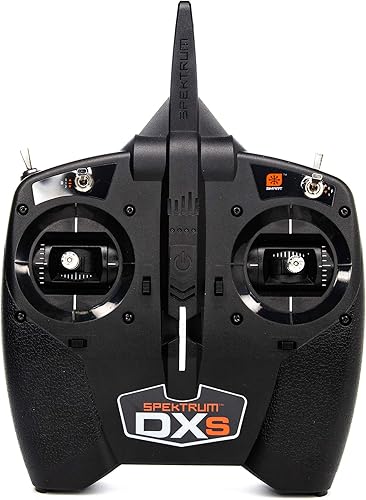 |  |  |  |  |
|---|---|---|---|---|---|---|---|---|---|---|
| Product | Flysky FS-i6X | Spektrum DX6e | Radiolink T8FB | Radiomaster Pocket | Radiomaster Boxer | Spektrum DXS | Radiolink AT9S Pro | Flysky FS-i6 | Radiolink T8S | HOTRC HT-8A |
| Brand | Flysky | Not stated | Radiolink | HAWK'S WORK | STARDRONE | Not stated | Radiolink | FLYSKY | Radiolink | Modelhive |
| Best for | Best Overall | Runner-Up | Best for App Setup | Best for Travel | Best for Ergonomics | Best for Smart Telemetry | Best for Long Range | Best for Battery Life | Best for Beginners | Best for Color Display |
| The listing says | Low power consumption with reliable sensitivity Bidirectional communication with sensor data support | 250-model memory for planes and drones Adjustable gimbal springs via slider switch | 67 channels with FHSS frequency hopping 8 channels with simulator and Bluetooth support | Portable design with foldable antenna Pre-installed ExpressLRS firmware with 250MW power | Built-in ELRS module with 1000Hz refresh Full-size V4.0 Hall-effect gimbals | Supports Smart ESC and LiPo telemetry LEDs display Smart LiPo battery status | DSSS and FHSS technology for 2.1 miles range 10/12 channels with telemetry and mixing | Low power consumption extends battery life Reliable 2.4GHz AFHDS 2A signal | FHSS technology with 1.3 miles range 8 channels with 5 hours standby time | 8-channel 2.4GHz FHSS control system 1.7-inch color display for real-time data |
| More information | Check Latest Price on Amazon | Check Latest Price on Amazon | Check Latest Price on Amazon | Check Latest Price on Amazon | Check Latest Price on Amazon | Check Latest Price on Amazon | Check Latest Price on Amazon | Check Latest Price on Amazon | Check Latest Price on Amazon | Check Latest Price on Amazon |
1. Flysky FS-i6X 6-10(Default 6)CH 2.4GHz AFHDS RC Transmitter w/ FS-iA6B
Best for: Someone wanting a reliable, multi-channel radio with sensor data feedback.
This transmitter offers 6 to 10 channels, making it a flexible choice for pilots who might add more features to their planes later. It uses an omni-directional high gain antenna designed to reduce interference, which helps keep your connection stable during flight. The system also supports bidirectional communication, allowing the radio to receive data from sensors like altitude or temperature.
The unit uses sensitive components to keep power consumption low, which helps extend the battery life compared to older systems. Because each transmitter and receiver pair has a unique ID, you don’t have to worry about other pilots causing interference at the flying field. It isn’t for someone who needs a color screen or advanced touchscreen programming, as this model uses a standard interface.
Good if:
- You want sensor data like altitude and temperature.
- You need to avoid interference from other nearby systems.
- You prefer a power-efficient radio system.
Skip it if:
- You want a modern color display.
- You find complex menu programming frustrating.
2. Spektrum DX6e 6-Channel DSMX 2.4GHz RC Radio Transmitter Only
Best for: An experienced hobbyist who wants to manage many different models.
The Spektrum DX6e is built for versatility, with memory to store up to 250 different models. This allows you to manage a large fleet of airplanes, helicopters, or multirotors. A unique feature is the adjustable gimbal spring configuration, which you can change simply by moving a slider on the back of the radio.
The wireless trainer link allows instructors to connect with students easily, which is a great feature for those learning to fly. It uses DSMX/DSM2 technology for compatibility with a wide range of existing aircraft. Note that this package doesn’t include a receiver, so you’ll need to purchase a telemetry-enabled receiver separately if you want to use the built-in telemetry features.
Good if:
- You own or plan to own many different RC models.
- You want to easily adjust your gimbal tension.
- You need a wireless trainer function for flight lessons.
Skip it if:
- You don’t want to buy a receiver separately.
- You’re looking for a pre-bundled package with all accessories.
3. Radiolink T8FB 8 Channels 2.4GHz RC Remote Transmitter and R8EF
Best for: Pilots who prefer using a smartphone app to configure settings.
The Radiolink T8FB focuses on ease of use by allowing you to set parameters through an iOS or Android app. This removes the need to navigate tiny screens on the radio itself. It supports a control distance of up to 2km, which is impressive for a basic transmitter, and it can be extended further with a different receiver.
The system is highly compatible, working with various flight controllers and microcontrollers like Arduino and Raspberry Pi. It features anti-reverse protection to prevent damage if you connect your battery with the wrong polarity. It isn’t for those who want a screen built into the radio, as all detailed adjustments happen on your phone or computer.
Good if:
- You like configuring settings on your smartphone.
- You need compatibility with autopilots or DIY hardware.
- You want a long-range control signal.
Skip it if:
- You prefer having a display screen on the transmitter.
- You don’t have a compatible smartphone for setup.
4. Radiomaster Pocket
Best for: A pilot who travels often and needs a small, portable radio.
The Radiomaster Pocket is designed for portability, featuring a foldable antenna and detachable joysticks. Despite its small size, it uses hall effect gimbals, which provide smooth and precise input for your flights. It comes pre-installed with ExpressLRS firmware, which is known for its high-performance and reliable connection.
You can charge the unit via a USB-C cable, which adds convenience for field use. The monochrome LCD screen is simple but provides the necessary information for your flight status. It isn’t for pilots who prefer the feel of a full-size controller, as the compact design may feel small in larger hands.
If you’re choosing between this radio and a larger model, consider your storage space. If your gear must fit into a small backpack, the foldable antenna and removable sticks make this the clear choice. If you prioritize long-range stability, remember that the built-in ELRS caps at 250mW. If you need more power, use the external NANO module bay to expand your range.
Expect about four hours of flight time from your rechargeable batteries. If you find your battery life dropping below this, check your switch inputs; the built-in LED lights provide a visual cue for your active settings. Always keep your firmware updated via the USB port or SD card to maintain compatibility with your 16 channels.
5. Radiomaster Boxer
Best for: Serious pilots who prioritize ergonomics and fast response times.
The Radiomaster Boxer is built with a high-performance STM32F407VGT6 chip and supports a fast 1000Hz refresh rate, making it precise for FPV racing or freestyle. It features full-size V4.0 hall effect gimbals and an intuitive button layout, including a dedicated 6-position flight mode switch. The oversized battery compartment fits a 2S 6200mAh pack, while QC3.0 support allows for 2.0A fast charging to eliminate battery anxiety.
It comes with a custom carry case and a gimbal protector to prevent damage during transport. The internal cooling fan is essential for maintaining stability during high-performance use. If you’re flying in hot conditions or pushing the ELRS module to its limits, ensure the cooling fan remains unobstructed to prevent thermal throttling.
The EdgeTX operating system offers deep customization, but it requires time to master. If you’re a beginner, focus on the standard button layout first before diving into the advanced firmware settings. This radio isn’t for those seeking a “plug-and-play” experience with zero configuration.
Good if:
- You want a highly ergonomic, comfortable transmitter.
- You need millisecond-level response times for racing.
- You want a bundled carry case for protection.
Skip it if:
- You aren’t ready to learn a sophisticated operating system.
- You want the smallest possible radio footprint.
6. Spektrum DXS
Best for: A beginner who wants the simplest possible setup with SAFE technology.
The Spektrum DXS is designed for ease of use, focusing on comfortable, fatigue-free control. It’s optimized to work with Spektrum’s Smart Technology, which allows it to display battery voltage directly on the radio via LEDs. This is a helpful feature for beginners who need to monitor battery health during flight.
If your battery status LEDs remain solid green, you have full power. If they drop to red, you must land immediately to avoid total power loss.
It also supports SAFE technology, which provides flight assistance for those still learning the basics of piloting an aircraft. The wireless trainer system is available if you add a compatible SRXL2 DSMX remote receiver.
This radio isn’t for someone who wants to perform deep programming or complex mixing, as it’s intentionally kept simple. If you require custom curves or advanced channel mapping, look for a more programmable transmitter.
Good if:
- You want to use Spektrum’s flight-assist technology.
- You need easy-to-read battery status indicators.
- You prefer a simple, no-fuss setup.
Skip it if:
- You want to program complex mixes or custom settings.
- You need more than the basic channel count.
7. Radiolink AT9S Pro 10/12 Channels Radio Transmitter and Receiver R9DS
Best for: Pilots who need a long-range signal and detailed telemetry data.
The Radiolink AT9S Pro offers a control distance of up to 3.4km, which is excellent for large flying areas. It uses DSSS and FHSS technology to maintain a stable signal. The 2.8-inch color screen displays real-time data like speed, altitude, and battery voltage when paired with a PRM-03 module and a compatible flight controller.
If you fly in noisy environments, rely on the system’s triple-threat warning: it uses DD sounds, vibration, and on-screen text to alert you to low voltage or signal drops. Always check your RSSI levels on the display to ensure you stay within the effective range.
The 3-in-1 port adds versatility by supporting simulator connections and external modules. If you want to use long-range protocols like TBS Crossfire or ELRS, this port allows for those upgrades. However, these modules are sold separately.
Don’t mistake this for a compact, pocket-sized device. It’s a standard, full-sized transmitter designed for serious hobbyists. If you prioritize portability over telemetry and long-range stability, you should look elsewhere.
Good if:
- You need a long-range control signal.
- You want a screen that displays detailed flight data.
- You prefer vibration and sound alerts for safety.
Skip it if:
- You want a lightweight, portable transmitter.
- You don’t need telemetry data or long-range capability.
8. FLYSKY FS-i6 6CH RC Transmitter and FS-iA6 Receiver 2.4GHz Radio
Best for: A first-time buyer looking for a proven, reliable entry-level system.
The Flysky FS-i6 is a classic choice for beginners because it’s stable and easy to operate. It uses the AFHDS 2A protocol to provide a reliable, interference-free signal. Each transmitter has a unique ID, ensuring that your radio only communicates with your specific receiver. This binding process locks the receiver to your transmitter, preventing signal conflicts even when other pilots are flying nearby.
It’s designed to be power-efficient, allowing you to get long flight times from just 4 AA batteries. The system uses highly sensitive components that consume as little as one-tenth the power of a standard FM system.
The 6-channel operation is sufficient for most basic trainer airplanes. It isn’t for someone who needs advanced features like high-speed telemetry or complex programming, as this is a basic, no-frills transmitter.
Good if:
- You want a simple, reliable system for your first plane.
- You prefer using standard AA batteries.
Skip it if:
- You need more than 6 channels.
- You want modern features like color displays or app integration.
9. Radiolink T8S 8 Channels 2.4G Pocket RC Transmitter and R8EF
Best for: Teenagers or adults who want a compact, ergonomic radio.
The Radiolink T8S is a pocket-sized transmitter that features a non-slip texture on the handle for a firm grip. Like the T8FB, it uses an app for setup, which makes it easy to change settings without a complex screen on the device. It has a built-in rechargeable battery with a 5-hour standby time.
If you’re flying in the air, the pseudo-random FHSS algorithm provides a stable signal up to 1.3 miles. Swap to an R8XM receiver if you need to extend that range to 4km. Always check your receiver type before flight; if you use the R12F or R16F, you can connect directly to simulators like Liftoff or Velocidrone without a dongle.
It’s compatible with many different Radiolink receivers, giving you plenty of options for different models. It isn’t for pilots who need a large number of switches or a built-in screen, as the small size limits the physical control layout. If you struggle to reach the sticks, remember that the app allows you to switch between Mode 1 and Mode 4 instantly.
Good if:
- You want a small, comfortable radio for your hands.
- You need a built-in rechargeable battery.
- You want easy app-based configuration.
Skip it if:
- You prefer many physical switches on your transmitter.
- You want a screen built into the controller.
10. HOTRC HT-8A 8CH 2.4GHz FHSS RC Transmitter with F-08A Receiver
Best for: Pilots who appreciate a clear color display for real-time monitoring.
The HOTRC HT-8A features a 1.7-inch color screen that provides a clear view of your channel settings and receiver feedback. It uses a reliable 2.4GHz FHSS system and offers 8 proportional channels for your hobby needs. You can power it using either 4 AA batteries or a 2S LiPo battery, providing flexibility for field use.
It includes useful programming functions like cruise control, sub-trim, and mixing, which are great for fine-tuning your aircraft. The receiver supports voltage feedback, keeping you informed about your power levels. It isn’t for someone who needs compatibility with specific proprietary radio protocols, as this system uses its own FHSS standard.
Good if:
- You want a color screen for easy data viewing.
- You need flexible power options at the flying field.
- You want built-in cruise control and mixing.
Skip it if:
- You need to bind to a specific brand of receiver.
- You want a more compact, portable form factor.
Choosing the best beginner transmitters
Many of these transmitters, such as the Flysky FS-i6 and the Flysky FS-i6X, share a very similar design philosophy. They’re both intended for beginners who need a reliable, simple radio capable of handling basic flight controls and a few extra features. The difference between them is mostly in the channel count and specific sensor capabilities. Similarly, the Radiolink T8FB and T8S are very close in function; both rely on an app for programming and share a similar internal protocol. The choice here comes down to whether you prefer the slightly larger, more traditional feel of the T8FB or the compact, pocket-friendly size of the T8S.
On the other hand, the Radiomaster Boxer and the Radiomaster Pocket are genuinely different. While both use the advanced ExpressLRS firmware, the Boxer is a full-sized, ergonomic radio for pilots who want the best handling, while the Pocket is a portable device for those who prioritize travel and storage. The Spektrum models, like the DX6e and DXS, are in a league of their own due to their proprietary DSMX protocol, which is widely used in the hobby and often required for specific pre-built aircraft. If you’re flying models that come “Bind-N-Fly,” you’ll likely find yourself choosing a Spektrum radio to ensure compatibility.
Still Not Sure?
How often will I really use it?
If you plan to fly every weekend, you should prioritize comfort and battery longevity. A radio like the Radiomaster Boxer is designed for long sessions, with its oversized battery compartment and ergonomic grip. If you only fly occasionally, you might prefer a simpler option like the Flysky FS-i6. Frequent flyers often find that a higher-quality radio is justified by the reduced hand fatigue and the ability to handle more complex models as their skills improve.
What do I already own that this has to work with?
Check if you have any existing airplanes that require a specific brand of receiver. If you have “Bind-N-Fly” aircraft, you almost certainly need a Spektrum transmitter to work with the built-in receivers. Using a different brand would require you to rip out the existing electronics, which is a difficult task for a beginner. Always check the receiver requirements of your current fleet before picking a transmitter. If you’re locked into the Spektrum ecosystem, the Spektrum DX6e is a very strong starting point for your needs.
What am I most likely to regret choosing?
Many beginners regret picking a radio that’s too simple once they start learning aerobatics or adding features like flaps or retractable landing gear. If you start with a 4-channel radio, you’ll quickly run out of room for upgrades. Choosing a radio with at least 8 channels, like the Radiolink T8FB, gives you plenty of headroom to grow without needing to buy a new system in six months. It’s better to have extra channels and not need them yet than to realize you’re out of options. Consider the Radiolink T8FB.
Frequently Asked Questions
Do I need a specific transmitter for my RC airplane?
Yes, your transmitter must be compatible with the receiver installed in your airplane. Most transmitters use a specific radio protocol, such as DSMX or AFHDS, to communicate with the receiver. Always check your aircraft’s manual to ensure your transmitter uses the required protocol for safe operation.
Can I use a simulator with these transmitters?
Many transmitters support flight simulators, though connection methods vary. Some models connect directly to your computer via USB, while others require a specific adapter cable or dongle. Check the product listing for “simulator support” to see if you will need additional hardware to practice your skills.
How do I know which channel count I need for my airplane?
The number of channels you need depends on your airplane’s control surfaces. A basic trainer typically requires four channels for throttle, aileron, elevator, and rudder. If you plan to add features like flaps or retractable landing gear, you will need additional channels for each function.
What is the difference between Mode 1 and Mode 2?
Mode refers to the configuration of the control sticks. In Mode 2, the most common configuration in the United States, the left stick controls throttle and rudder, while the right stick controls elevator and ailerons. Always confirm which mode your instructor uses before you begin training.
Closing
Selecting the right transmitter is the first step to enjoying your time in the air. If you want simplicity and ease of use for a first-time flight, the Spektrum DXS is a reliable choice that helps you get airborne quickly. If you’re looking for long-term growth and advanced features, the Radiomaster Boxer offers the performance and ergonomics to carry you through years of hobby development.
Review your specific model requirements and your preferred programming style, then choose the radio that fits your long-term goals. If you prioritize portability and travel, consider the Radiomaster Pocket, which features a foldable antenna and detachable joysticks. If you need integration with specific autopilots like ArduPilot or PX4, the Radiolink T8FB provides broad compatibility with various microcontrollers. Always check if your chosen model includes a receiver, as some units like the Spektrum DX6e require separate purchases to enable full telemetry features.


