
Choosing a durable RC plane for kids depends on balancing crash resistance with flight control, with top options including the 4 Channel P51 Mustang for performance or the Biplane Auto-Balance Gyro for durability. These planes vary by stabilization systems and material resilience, which determine how well they handle rough landings. Selecting the right model requires considering the pilot’s experience level and the available flying environment.
All 10 products side by side — scroll sideways to see every column.
| Top Pick | Best for Beginners | Best for Long Flights | Best for Stunt Flying | Best for Water Use | Best for Park Flying | Best for Simple Flight | ||||
| Preview |  |  |  |  |  |  |  |  |  | 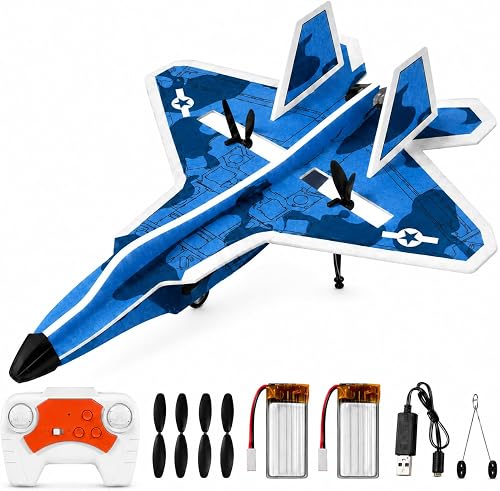 |
|---|---|---|---|---|---|---|---|---|---|---|
| Product | 4 Channel P51 Mustang | Biplane Auto-Balance Gyro | DEERC BF-109 Fighter | 4DRC V32 Foam Jet | DEERC Tri-Phibian Aircraft | 3CH P-51 Gyro Plane | SYMA X550 Stunt Plane | SIMREX P51 Foam Glider | 2CH F-22 RC Glider | F-16 Gyro Plane |
| Brand | LEAMBE | BEACONDESI | DEERC | 4DRC | DEERC | AIGIMU | SYMA | SIMREX | HAWK'S WORK | JOI MEW |
| Best for | Top Pick | Best for Beginners | Best for Long Flights | Best for Stunt Flying | Best for Water Use | — | — | Best for Park Flying | Best for Simple Flight | — |
| The listing says | Lightweight elastomer foam for stability Three flight modes for all skill levels | 6-axis gyroscope for auto-balancing Flexible, impact-resistant materials | 6-axis gyro stabilization system Durable, lightweight EPP foam structure | Supports 360-degree flips and stunts Equipped with bright LED lights | 3-channel design for land and water Ground, hand-toss, or water takeoff | Realistic P51 Mustang scale model 3-channel design with dual motors | Authentic military-inspired design Supports 360-degree spins and stunts | Flexible EPP foam with 6-axis gyro Two batteries for 40 minutes flight | Built-in self-stabilization system Lightweight and durable foam structure | 2.4GHz control with one-key takeoff 6-axis gyro for flight stability |
| More information | Price on Amazon | Price on Amazon | Price on Amazon | Price on Amazon | Price on Amazon | Price on Amazon | Price on Amazon | Price on Amazon | Price on Amazon | Price on Amazon |
1. 4 Channel P51 Mustang
Best for: A pilot ready to learn aerobatic maneuvers and precise flight controls.
This plane is designed for those who want to move beyond simple flying and start practicing specific maneuvers. It uses an elastomer foam construction to remain lightweight, which helps the plane stay in the air for up to 12 minutes. The 4-channel control system allows for more complex movements compared to basic 2-channel models, making it a natural step up for someone who has already mastered basic flight.
The Xpilot stabilization system is the core feature here, providing self-stabilization that helps keep the plane level during turns. The propeller saver technology is a helpful addition, as it’s designed to protect the motor and blades during accidental impacts.
Good if:
- You want to practice aerobatic maneuvers.
- You need a plane with built-in stabilization.
- You prefer a lightweight, flexible foam build.
Skip it if:
- You have zero experience with remote-controlled flight.
- You want a plane that can land on water.
2. Biplane RC Airplane for Kids & Adults – 2.4GHz Remote
Best for: A first-time pilot who expects frequent crashes and wants a forgiving design.
This biplane is built to survive the learning curve of a new pilot. Its standout feature is the impact-resistant material that allows the wings to fold and snap back into place after a collision. This makes it ideal for backyard flying where trees, fences, or hard ground might be a factor.
The 6-axis gyro is constantly working to auto-correct the flight path, which helps keep the plane steady even when the pilot makes sudden, jerky movements. Because of its compact size and durable design, it’s well-suited for someone who needs a plane that can be thrown into a backpack for trips to the park. It isn’t for someone looking for high-speed, long-distance performance, as its focus is entirely on stability and durability.
Good if:
- You’re a beginner worried about crashing.
- You want a plane that fits in a backpack.
- You prefer a design that survives hard landings.
Skip it if:
- You want to fly at high speeds.
- You need a long flight range.
3. DEERC RC Plane 3 Channel BF-109 Remote Control Airplane Fighter
Best for: An enthusiast who wants a realistic fighter jet look with extra battery life.
The DEERC BF-109 Fighter stands out for its power and endurance. With dual motors and two included batteries, the pilot can get roughly 20 minutes of flight time before needing to recharge. This is a great choice for someone who gets frustrated when a flight session ends too quickly.
The 3-channel control system is designed to be accessible while still allowing for some basic aerobatic practice. Its EPP foam structure is meant to handle outdoor bumps, and the ability to choose between hand-throwing or sliding takeoffs adds variety to how the pilot begins each flight. This model isn’t for someone who wants to fly in very tight indoor spaces, as the dual-motor power is better suited for open outdoor areas.
Good if:
- You want longer flight times with included spare batteries.
- You enjoy a realistic fighter jet aesthetic.
- You want two different takeoff methods.
Skip it if:
- You’re looking for a plane specifically for indoor use.
- You find 3-channel controls too complex for your current skill level.
4. 4DRC V32 Foam Remote Control Airplanes RC Planes
Best for: A kid who loves night flying and flashy aerial stunts.
The 4DRC V32 is all about visual excitement. It features built-in LED lights that make it easy to track in the evening or at night, turning every flight into a light show. The plane is also packed with stunt features like 360-degree flips and rolls, which are triggered through the remote.
Safety is a priority here, as the four propellers are tucked inside a protective structure. This design protects fingers and keeps the blades from snapping during an impact. Use the altitude hold feature if you’re a beginner struggling to keep the plane level. If you’re flying in a confined space like a backyard, rely on the three speed options to prevent crashes.
It’s a very user-friendly option for kids, as it requires no assembly and includes features like one-key takeoff. This plane isn’t for a pilot who prioritizes long-distance stability over stunt performance, as its lightweight frame is built for agility. The EPP foam construction is designed to bounce back from tumbles, but avoid flying in high winds, as the lightweight body will struggle to maintain its flight path.
Good if:
- You want to fly in the evening with LED lights.
- You want to perform 360-degree flips easily.
- You need a child-safe propeller design.
Skip it if:
- You want a realistic, scale-model appearance.
- You prefer slow, steady gliding over stunt flying.
5. DEERC Tri-Phibian Aircraft
Best for: Someone with access to both water and land for diverse flight sessions.
This plane is uniquely designed to operate on water, land, and in the air. Its waterproof body allows for takeoffs from lakes or ponds, providing a different experience from standard grass-only models. It offers over 24 minutes of flight time when using both included batteries, which is helpful for extended outings.
The plane includes safety features like a low-battery alert and an out-of-range warning, which help prevent the aircraft from being stranded. If it happens to flip over on the water, the design allows the pilot to maneuver it back to safety. Always land immediately when the low-battery alert triggers to prevent power depletion.
This isn’t the best choice for someone who only flies in a small backyard, as the amphibious features are wasted without a body of water nearby. Choose the low-speed mode if you’re a novice learning to handle the controls; switch to the high-speed mode once you’re comfortable maneuvering in the air.
Good if:
- You have access to a pond or lake.
- You want extended flight time for long sessions.
- You need safety alerts for battery and range.
Skip it if:
- You only plan to fly over dry grass or concrete.
- You want a pure glider experience.
6. 3CH P-51 RC Airplane with 6-Axis Gyro
Best for: A beginner who wants a high-quality, scale-model look with long flight endurance.
This P-51 model is designed to look like a piece of craftsmanship, making it a great choice for someone who appreciates the aesthetics of a warbird. It uses a 6-axis gyro to ensure the flight remains smooth, which is ideal for beginners who are still learning the ropes.
With two batteries included, this plane provides over 40 minutes of total flight time. If you’re flying in a wide-open field, use the ground take-off mode for a realistic start. If your flying area has tall grass or uneven terrain, switch to the hand take-off mode to protect your propellers.
The plane features two speed modes. Use the lower speed setting to master your turns and climbs before attempting higher speeds. This model isn’t for someone who wants to perform aggressive 3D stunts, as it’s tuned more for realistic, stable flight.
The EPP foam construction is designed to handle bumps. If you experience a hard landing, check the thickened metal undercarriage before your next flight to ensure it remains aligned.
Good if:
- You want a very realistic looking scale model.
- You need a long total flight time.
- You want spare parts like extra propellers included.
Skip it if:
- You want to perform complex aerobatic stunts.
- You’re on a strict timeline and can’t wait for battery charging.
7. SYMA X550 Stunt Plane
Best for: A teen or adult looking for a tiltrotor design that feels different from standard props.
The SYMA X550 uses a unique tiltrotor design that allows for specialized flight maneuvers. It’s capable of 360° spins, circular routes, and jump flights. These features make it a fun choice for someone who wants to show off at a park or community event.
The 4-channel control system offers more natural steering, which helps a beginner feel more in command of the plane’s path. It also features one-key takeoff and landing to reduce the stress of starting and finishing a flight. If you’re learning, start in the low-speed setting to build confidence. Switch to high speed only when you’re ready to push the aircraft to its limits.
This plane isn’t for someone who wants a quiet, slow-flying glider. Its design is geared toward active stunt performance. If the wind is blowing, keep the plane indoors or wait for a calm day to ensure the best handling.
Good if:
- You want a unique tiltrotor flight experience.
- You prefer the handling of a controller that allows for full, multi-axis aerobatic maneuverability.
- You want an easy one-key takeoff system.
Skip it if:
- You want a traditional, slow-flying glider.
- You’re looking for a simple, no-frills trainer.
- You intend to fly primarily in windy outdoor conditions.
8. SIMREX P51 Foam Glider
Best for: A first-time pilot who wants a forgiving, stable glider for park flying.
This plane is built specifically for park flying with an EPP foam body that absorbs impacts well. The 6-axis gyro provides automatic stabilization, which is essential for someone who is nervous about their first few flights. It corrects the plane in the air, resulting in smoother turns and steadier climbs.
The inclusion of two batteries provides over 40 minutes of flight, allowing for plenty of practice time. It offers both hand-launch and runway takeoff options, which lets the pilot decide how they want to get into the air. Start by hand-launching over soft grass until you master the controls.
This model isn’t for a pilot who wants to fly in windy conditions, as its lightweight, glider-focused design is best in calm air.
Good if:
- You’re a first-time pilot.
- You have a large open park to fly in.
- You want a choice between hand-launch and runway takeoff.
Skip it if:
- You plan to fly in high-wind environments.
- You want a high-speed fighter jet experience.
- You don’t have access to soft grass or turf for safer landings.
9. 2CH F-22 RC Glider
Best for: A total beginner who wants the simplest possible flight experience.
This basic glider is the definition of simplicity. It focuses on the basics—up/down and left/right—which makes it very easy to pick up. It includes a self-stabilization system that helps keep the plane in the air without requiring constant adjustments from the pilot.
The lightweight foam structure is durable enough to handle minor crashes, which is important for a beginner’s first plane. It’s a very straightforward, no-nonsense option for someone who just wants to see their plane fly without worrying about complex controls. It isn’t for someone who wants to grow into more advanced aerobatics, as the simplified control scheme is limited by design.
Good if:
- You want the simplest possible controls.
- You’re a beginner who wants to fly quickly.
- You prefer a lightweight, simple glider.
Skip it if:
- You want to learn advanced aerobatic maneuvers.
- You’re looking for a plane with high-speed capabilities.
10. F-16 2CH RC Plane
Best for: A pilot who wants a bit of extra help with the takeoff phase.
The F-16 Gyro Plane is designed to make the most difficult part of flying—the takeoff—as easy as possible with a one-key function. This helps build confidence for kids aged 8-12 who might be intimidated by manual launching.
The 6-axis gyro keeps the plane balanced during flight, and the MPP foam construction is specifically chosen for its crash resistance. If you find the plane wobbling during turns, check the tail wing angle. You can fine-tune this setting to shift the performance between smoother gliding and more responsive movement.
The addition of LED lights makes it look great in the air, especially during sunset or evening flights. Beginners often make the mistake of flying in high winds; because this plane uses lightweight foam, it performs best in calm, outdoor conditions. If you’re flying in a large, open club where high-speed agility is the primary goal, this model will feel too limited. It’s tuned for stability rather than complex maneuvers.
Good if:
- You want an easy one-key takeoff feature.
- You need a crash-resistant foam build.
- You want LED lights for better visibility.
Skip it if:
- You’re an experienced pilot looking for complex controls.
- You need a plane for very long-distance, high-speed flying.
Choosing a durable plane for kids
Many of these planes share the same fundamental technology, particularly the use of EPP or MPP foam and 6-axis gyro stabilization. If you look at the 4 Channel P51 Mustang, the SIMREX P51 Foam Glider, and the 3CH P-51 Gyro Plane, you’ll notice they all use the P-51 Mustang as a base. The choice between these often comes down to the number of channels (3 versus 4) and the specific accessories included, such as extra batteries or spare propellers. If you’re a beginner, the difference between a basic trainer and a fully aerobatic plane is significant; simpler models are generally easier to handle because they don’t require as much simultaneous input.
Some planes, like the 4DRC V32 and the SYMA X550, focus more on stunt-based fun, while models like the DEERC BF-109 and the F-16 focus on scale-model aesthetics and stable flight. The most important distinction is between those that are “RTF” (Ready to Fly) and those that require even minor assembly. Most of these are RTF, meaning they’re ready within minutes, but checking for included spare parts—like the extra batteries found with the DEERC and SIMREX models—is usually the deciding factor for parents who want to avoid mid-day disappointment.
Still Not Sure?
How often will I really use it?
If you’re buying this for a child who will use it once or twice a month, look for durability above all else. The Biplane Auto-Balance Gyro is excellent here because of its bend-proof design that survives backyard crashes. If you plan to fly every weekend, you should prioritize models that come with multiple batteries, such as the DEERC BF-109 or the 3CH P-51 Gyro Plane. You want to avoid waiting for a single battery to charge while the child is ready to play. For frequent flyers, the 3CH P-51 Gyro Plane is a top choice.
What do I already own that this has to work with?
Think about the space you have. If you only have a small backyard, a large, fast plane will be hard to control. The Biplane Auto-Balance Gyro or the 4DRC V32 Foam Jet are better suited for smaller areas because of their compact sizes and protective propeller structures. If you have a massive open park or a lake, the DEERC Tri-Phibian Aircraft opens up a whole new way to fly that the other models can’t match. For water-based fun, the DEERC Tri-Phibian Aircraft is the clear winner.
What am I most likely to regret choosing?
Most buyers regret choosing a plane that’s too complex for the pilot’s skill level. If you buy a complex aerobatic plane for a total beginner, they may get frustrated by the constant crashes. It’s much better to start with a basic, simplified plane with strong gyro stabilization, like the F-22 RC Glider or the SIMREX P51 Foam Glider. These planes provide a sense of success early on, which is vital for keeping a child interested in the hobby. For absolute simplicity, the F-22 RC Glider is the safest bet.
Frequently Asked Questions
How do I ensure the rc plane for kids is safe for my child?
Remote-controlled aircraft safety relies on lightweight materials and protective propeller housings. Models like the 4DRC V32 Foam Jet use these features to prevent injury. Always follow FAA recreational flight guidelines and review your specific model’s manual for safety alerts.
Can I fly these rc planes in the wind?
Most foam planes are susceptible to wind, so they are best suited for calm days. Models like the 3CH P-51 Gyro Plane include stabilization systems to assist in light breezes. Note that even with stabilization, these lightweight aircraft are not designed for high-wind performance.
What happens if the plane crashes?
Most planes use flexible EPP or MPP foam to remain impact-resistant during crashes. This material absorbs energy to prevent shattering upon impact. If you are concerned about damage, choose models that include spare propellers, as these parts are the most likely to break.
Do I need to buy extra batteries for my rc plane?
Many models, such as the DEERC BF-109 and SIMREX P51, include two rechargeable batteries to double your flight time. Using the provided charging equipment is essential for maintaining battery health. If your model only includes one battery, check if the manufacturer offers compatible spares.
Conclusion
Once you’ve picked a model, head to a wide-open park with plenty of soft grass. Don’t worry if it doesn’t fly perfectly on your first try; practice makes a huge difference. You’ll have a great time watching it soar once you’re comfortable with the controls. Just keep your batteries charged and enjoy!


