
Choosing a childrens diy stem car kit comes down to how much guidance your child needs and what they want to learn. Some kits focus on simple mechanics and building with wood, while others introduce complex coding and remote control technology. The main difference is whether you want a quick afternoon project or a long-term learning tool.
Best overall: Elegoo UNO R3 Robot, because it offers a comprehensive introduction to coding and robotics with modular, beginner-friendly components that grow with the user’s skill level. Best for hands-on builders: SainSmart Jr Woodworking, as it provides a realistic experience with screws and wood, teaching practical construction skills alongside basic engineering concepts. Best for simple play: Smartivity DIY Race Car, because it uses basic physics and elastic power to create immediate, repeatable fun without needing batteries or complex wiring.
This guide is for parents and educators looking to match a project to a child’s age and interest in engineering.
How We Picked
We compared 48 different kits to find options that balance educational value with ease of assembly. To make the list, a product had to provide clear information on its components, build method, and intended age range. We focused on kits that include all necessary parts for a successful project, ensuring that the learning experience remains the priority. Products were excluded if they lacked clear assembly instructions or failed to define the core STEM concept they intend to teach.
All 10 products side by side — scroll sideways to see every column.
| Top Pick | Best for Solar Power | Best for Fast Action | Best for Drifting | Best for Remote Control | Best for Group Projects | Best for Older Kids | Best for Painting | Best for Woodworking | ||
| Preview |  |  |  |  |  |  | 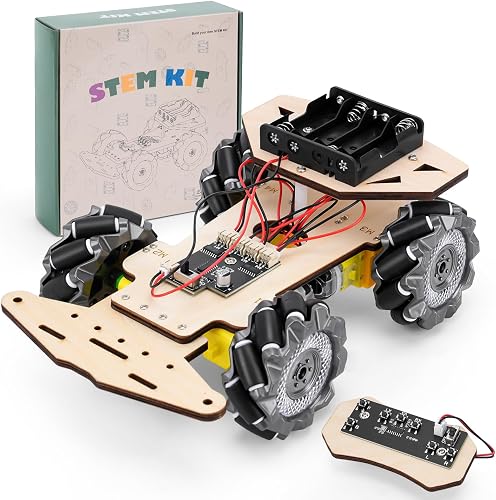 |  | 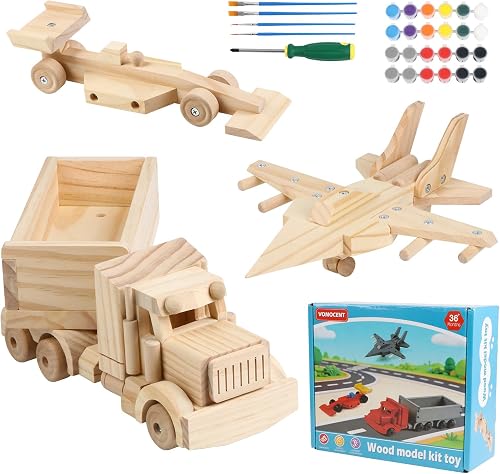 |  |
|---|---|---|---|---|---|---|---|---|---|---|
| Product | Elegoo UNO R3 Robot | Sillbird 12-in-1 Robot | Smartivity DIY Race Car | Self-Centering Steering RC | STEM Wooden Racing Car | STEM Wind-Powered Cars | RC Robot Car Kit | Balloon Power Car Kits | Vomocnet 3 Pack Kit | SainSmart Jr Woodworking |
| Brand | ELEGOO | Sillbird | Smartivity | ScienSta | ZOVRION | Yutin | LEPANDA | Seenelling | Vomocent | SainSmart Jr. |
| Best for | Top Pick | Best for Solar Power | Best for Fast Action | Best for Drifting | Best for Remote Control | Best for Group Projects | Best for Older Kids | — | Best for Painting | Best for Woodworking |
| The listing says | Assemble, program and drive robot car Features FPV, line tracking and avoidance | STEM solar building toy Powered by sun or artificial light | DIY race car kit for ages 6-12 Elastic-powered launcher for speed | Performs drifting motion at high speed Features self-centering steering | DIY STEM car assembly 40-60 minutes Remote-controlled rear-wheel drive | Build 6 wind-powered cars Requires AA batteries | Mecanum wheels for omnidirectional movement Laser-cut wooden body | Makes 10 balloon-powered cars Assembled size 5 x 2.76 inches | Includes truck, jet and racing car Comes with 9 colors and 4 brushes | Flat head screws for safety Build bird house, helicopter, car, truck |
| More information | Check Latest Price on Amazon | Check Latest Price on Amazon | Check Latest Price on Amazon | Check Latest Price on Amazon | Check Latest Price on Amazon | Check Latest Price on Amazon | Check Latest Price on Amazon | Check Latest Price on Amazon | Check Latest Price on Amazon | Check Latest Price on Amazon |
1. ELEGOO UNO R3 Smart Robot Car Kit V4 with Camera
Best for: Older kids interested in coding and robotics.
This kit turns electronics and programming into a functional robot car. It includes everything from the controller board to the camera and sensors, allowing users to explore line tracking and obstacle avoidance. The keyed connectors help prevent wiring mistakes, making the assembly process approachable for beginners.
Once built, the robot supports custom coding through the Arduino IDE. This means a child can move from following basic examples to creating their own unique routes and reactions. It isn’t for the child who wants an instant, pre-built toy, as the programming and assembly require patience and adult guidance.
Pros
- Includes rechargeable battery
- Detailed illustrated tutorial
- Expandable coding options
Cons
- Requires adult guidance
- Complex assembly process
2. Sillbird 12-in-1 Solar Robot Building Kit STEM Gift
Best for: Kids who enjoy outdoor science activities.
The Sillbird 12-in-1 Robot uses solar power to bring engineering to life. With 190 parts, it allows children to build 12 different models, ranging from simple designs to more challenging builds. The large solar panel harvests sunlight to power the creations, teaching kids about renewable energy through direct observation.
If you’re working indoors, use a strong artificial light source like a flashlight to maintain power. Direct sunlight remains the most effective way to ensure uninterrupted play. If the robot fails to move, check that the solar panel is positioned to catch the maximum amount of light.
Because the difficulty increases with each model, this kit grows alongside your child’s building skills. Start with the simpler beginner models to build confidence before attempting the advanced builds. This progression helps children develop problem-solving skills without feeling overwhelmed by the 190-piece inventory.
It’s perfect for kids who want to try multiple designs, though it isn’t ideal for those who prefer indoor racing. The kit requires steady light to function, so avoid using it in dimly lit rooms. Use the included step-by-step instructions to ensure each gear is correctly aligned during assembly.
Pros
- 12 buildable models
- Renewable solar power
- Growing difficulty levels
Cons
- Needs bright light
- Many small parts
3. Smartivity DIY Race Car Model Kit with Launcher
Best for: Young builders who love fast action.
This kit focuses on the physics of movement and stored energy. Kids assemble a race car from laser-cut wooden sheets and pair it with a rubber-band launcher. When they pull back and release the launcher, the car zooms across smooth surfaces, providing immediate feedback on how tension and angles affect speed.
You can tell if this project is the right fit by looking at your available space. Because the car relies on momentum rather than a track, it requires a flat, smooth floor to perform at its best.
The kit is designed for repeated play and includes a lifetime replacement policy for parts. If a piece breaks or goes missing during assembly, you can request a replacement. This ensures the toy remains functional even after heavy use.
It isn’t for children looking for electronic features or motor-driven movement, as this is a purely mechanical, physics-based project.
Pros
- No batteries needed
- Lifetime replacement parts
- Durable wooden construction
Cons
- Limited to manual launching
- Needs smooth floors
4. Self-Centering Steering RC
Best for: Young racers wanting remote control fun.
This kit emphasizes vehicle dynamics through its self-centering steering and drifting capabilities. The steering system automatically returns to its original alignment after every turn. This teaches children how mechanical systems maintain stability during movement.
When the car travels at high speeds and executes a sharp turn, it performs a controlled drift. Use this motion in open areas to get the best results. You should reserve this feature for outdoor play where the vehicle has room to slide safely.
The remote control functions up to 160 feet in open spaces. Because the signal is interference-free, multiple cars can race simultaneously without crossing signals. This is ideal for groups of friends or family members.
The kit isn’t for children who prioritize the complex engineering of the assembly process. The design focuses heavily on the performance of the finished vehicle rather than the build itself. If your child prefers spending hours on intricate construction, they may find the assembly portion too brief.
Pros
- Long-distance remote control
- Drifting motion features
- Multiple car racing
Cons
- Less assembly focus
- Needs open space
5. STEM Wooden Racing Car
Best for: Kids who want a balance of building and racing.
This racing car kit combines eco-friendly wooden construction with a high-speed gearbox. It takes about 40 to 60 minutes to assemble, making it a manageable project for a single session. The remote control provides responsive, realistic steering that helps children see how mechanical components translate into movement.
If your child struggles with frustration during complex builds, the included visual and video guides provide the necessary support to ensure success. However, if you’re looking for a project that lasts several days, this kit is likely too simple. It’s designed for quick assembly rather than long-term construction.
Focus on the gear ratios when building. If the car lacks torque, check that the gearbox is seated correctly, as even minor misalignments in the wood frame can impede the motor’s performance.
Pros
- Eco-friendly wood materials
- Includes video guides
- Responsive rear-wheel drive
Cons
- Short assembly time
- Basic feature set
6. STEM Wind-Powered Cars
Best for: Classroom or group activities.
This set includes six separate kits, making it ideal for groups or multiple projects. It focuses on converting electrical energy into kinetic motion using wind-powered designs. Each kit is packaged individually, which keeps parts organized and easy to distribute for lessons or home play.
The wooden parts are non-toxic and designed to be punched out easily without screws. It isn’t for the child who wants a single, highly complex robot, as these are simpler models focused on basic circuit connections and physics.
If you’re teaching a classroom or a homeschool group, use the individual packaging to assign one kit per student. This ensures every child manages their own assembly from start to finish. If you’re working at home, keep the kits separate to avoid mixing parts, as each model requires its own specific set of accessories.
Remember that you must provide AA batteries, as they aren’t included in the box. If the car fails to move, check the circuit connections first. A loose wire is the most common reason for a motor failing to convert energy into motion.
Pros
- Includes six kits
- No screws needed
- Individual packaging
Cons
- Needs AA batteries
- Simple model design
7. RC Robot Car Kit
Best for: Teens exploring omnidirectional movement.
This kit features Mecanum wheels, which allow the car to move in any direction, including diagonally. The laser-cut wooden body has a tech-inspired look that appeals to older kids and teens. The assembly process is designed to be accessible while providing a deep dive into how specialized wheels function.
It’s a great way for curious learners to experiment with robotics. However, it isn’t for beginners who have never built a model before, as the unique wheel system requires careful attention during the assembly process to function correctly. If the wheels bind during testing, check the alignment of the rollers immediately. Misalignment here is the most common mistake and will prevent the car from moving sideways.
If you’re buying for an eight-year-old, expect to assist with the assembly to ensure the structural integrity of the wooden frame. For teens aged 12 to 16, the kit provides an independent challenge that rewards patience.
Pros
- Mecanum wheel movement
- Tech-inspired design
- Detailed color instructions
Cons
- More complex build
- Larger part count
8. Balloon Power Car Kits
Best for: Large groups and party activities.
This set provides 10 balloon-powered cars, making it perfect for races or gatherings. It teaches the basic principles of movement and recoil as the air from the balloon pushes the car forward. The baseboards are white, allowing kids to paint and customize their cars to their liking.
The kits are made from EVA material and are designed to be durable enough for numerous races. It isn’t for a child who wants a long-term engineering project, as these are designed for quick assembly and immediate, high-energy play. If you’re hosting a group, use the included 10 baseboards, 30 cylinders, and 40 wheels to ensure everyone has a complete vehicle.
If you want to test aerodynamics, modify the car frames or design a custom track to change how the vehicle travels. When the car measures 5 x 2.76 inches after assembly, it’s small enough to carry anywhere. Avoid using heavy paints that might weigh down the EVA material, as this can limit the distance the car travels during your racing sessions.
Pros
- A comprehensive collection of kits is included.
- Highly customizable
- Great for racing
Cons
- Basic materials
- No electronic parts
9. Vomocnet 3 Pack Kit
Best for: Creative kids who love arts and crafts.
This set includes three distinct models: a semi-trailer truck, a fighter jet, and a race car. It comes with four paint brushes and four pigments offering nine realistic colors, allowing children to decorate their creations after they finish the assembly. This kit is built from 100% natural wood and focuses on developing hand-eye coordination and fine motor skills.
The kit includes a screwdriver and a bag of spare parts to ensure the building process remains stress-free. If a child struggles with the assembly, follow the provided detailed instructions to keep the project on track. Because the pieces are sanded to be burr-free, they’re safe for younger hands to handle during construction.
It’s a perfect choice for siblings or friends to work on together, as the three models offer varying difficulty levels. If you want to encourage teamwork, assign one model to each child to foster collaborative play. It isn’t for the child looking for advanced robotics or high-speed racing, as these models are static, decorative pieces once they’re finished.
Pros
- Includes three models
- Paint and brushes included
- Natural wood construction
Cons
- Models are static
- No motorized movement
10. SainSmart Jr. Woodworking Building Kit
Best for: Kids wanting a realistic woodworking experience.
This 4-in-1 set includes a birdhouse, helicopter, off-road car, and tow truck. It uses flat-head screws and a counterbore design to mimic a real woodworking process, which helps kids learn about construction safety and technique. The finished models are stable and ready for play after assembly.
If your child struggles with fine motor tasks, focus on the off-road car first; it’s the most straightforward build. If they’re ready for a challenge, start with the helicopter. You can distinguish between these levels by checking the part count in the provided instructions before beginning.
Many parents make the mistake of handing over the kit without preparing paint or brushes. Because the wood arrives unfinished, the project is only half-complete once the screws are tightened. Buying a small set of acrylic paints beforehand allows children to customize their models immediately.
It isn’t for a child who wants to work entirely alone, as the manufacturer requires adult supervision during installation.
Pros
- Realistic screw assembly
- Four different models
- Stable finished toys
Cons
- Requires adult help
- No electronics
How to Choose in Sixty Seconds
Which engineering concept should I look for?
Decide if you want a project that focuses on electronics or mechanical physics. For kids who want to learn about circuits and logic, the Elegoo UNO R3 Robot is the standard choice. If your child is more interested in physical forces like tension or wind power, the Smartivity DIY Race Car or the STEM Wind-Powered Cars will be more engaging. Always check the Consumer Product Safety Commission guidelines for toy safety to ensure the materials match the age and maturity level of your child before you buy.
Does the assembly difficulty matter?
Yes, the difficulty determines how much adult help is needed. If you want a project your child can complete independently, look for kits like the STEM Wind-Powered Cars that use simple, screw-free connections. For a deeper learning experience, kits like the SainSmart Jr. Woodworking set require more patience and help but reward the builder with a stronger sense of accomplishment. Avoid kits that are far above your child’s age group, as frustration often leads to the kit being set aside unfinished.
What should I confirm before ordering?
Check if the kit requires extra items like batteries, glue, or paint. Many kits, such as the STEM Wind-Powered Cars, don’t include the batteries needed to run the motors. Also, confirm if the kit is a single-model build or a set that allows for multiple configurations. If your child loses interest quickly, a multi-model kit like the Sillbird 12-in-1 Robot provides more variety. Finally, look for kits with clear, illustrated instructions, as these are much easier for children to follow than text-heavy manuals.
The Elegoo UNO R3 Robot stands out as the best overall choice for those seeking a deep, educational dive into robotics and coding. For a simpler, tactile experience that emphasizes building skills, the SainSmart Jr. Woodworking kit is a top performer. Both options offer great value in terms of the skills they teach and the quality of the components. Before you finalize your order, make sure you have the necessary tools or batteries on hand if they aren’t included in the box. These kits provide a wonderful foundation for any young engineer, so choose the one that best matches your child’s current interests and skill level.
Related guides
- Self Build Radio Controlled Cars: Ultimate DIY STEM Kits for Kids and Teens
- Diy Rc Airplane Kits: Build Lightweight Electric Remote Control Planes
- Cardboard Rc Plane DIY Kit: Lightweight, Foldable, and Easy to Fly
Frequently Asked Questions
What does it take to make these kits work?
Most kits require basic tools like a screwdriver, while electronic models like the Elegoo UNO R3 Robot require a computer for programming. You should verify if the listing includes batteries, as many motorized cars require AA or rechargeable batteries not found in the box. Always inspect the parts list in the manual immediately after opening to ensure everything is present before you begin the assembly process.
What kind of maintenance does a STEM car need?
Maintaining these kits is usually simple, focusing on keeping the wheels clean and ensuring the wiring remains secure. For remote-controlled models, check the battery compartments for corrosion and ensure the connections are tight after every few sessions of play. If you choose a wooden kit like the Smartivity DIY Race Car, keep it away from moisture to prevent the wood from warping.
What is the first thing that usually breaks?
In mechanical kits, the most common points of failure are the rubber bands used for launchers or the plastic gears in the motors. Wooden parts can also snap if handled too roughly during the assembly of tight-fitting joints. If you choose a kit with a lifetime replacement policy, like the Smartivity DIY Race Car, you can easily replace these worn parts.
Is the simplest kit on the list enough?
Simple kits are the best starting point for children new to STEM projects. Kits like the Balloon Power Car or Wind-Powered Cars provide immediate gratification while teaching fundamental physics. You can move to advanced robotics once your child masters these basic machines.
Conclusion
Once your little engineer finishes their build, don’t just put it on a shelf. Take it outside to test how it handles different surfaces like carpet or pavement. You’ll be surprised by how much they’ll learn from making small adjustments. It’s a great way to keep their curiosity growing every single day.


