No, it isn’t safe to carry a load on a rope with dji mini 3 because the aircraft isn’t designed for external cargo and doing so will likely cause a crash. Attaching any object to the drone creates unpredictable aerodynamic drag and alters the center of gravity, which forces the flight controller to work beyond its programmed limits. If you ignore this, you risk losing the drone, damaging property, or injuring people nearby.
Is it safe to carry a load
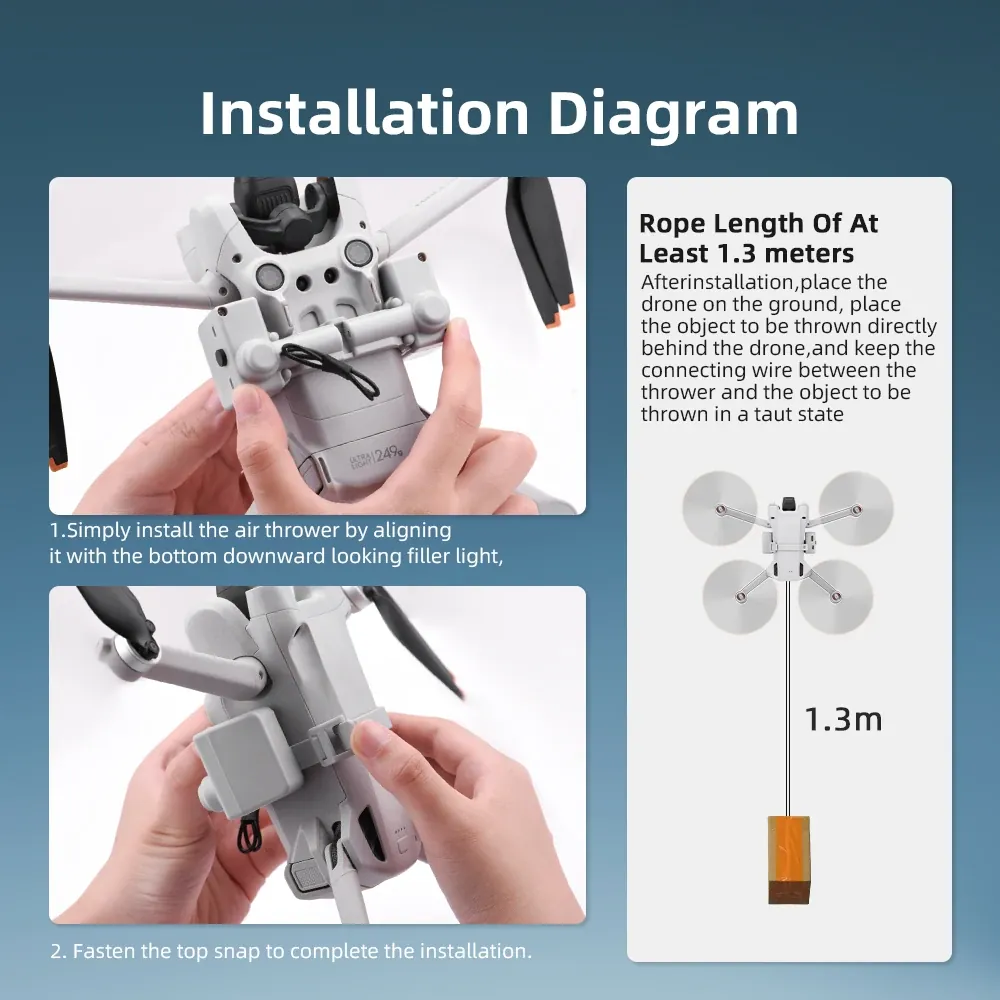
The following table breaks down common scenarios involving external attachments and whether they’re safe for a consumer-grade sub-250g drone.
| Situation | Safe? | Why |
|---|---|---|
| Carrying light items | No | Unpredictable drag causes instability |
| Using specialized hooks | No | Changes the center of gravity |
| Flying without mods | Yes | Designed for standard flight only |
| Attaching external lights | With care | Adds weight and affects battery |
| Towing a rope | No | High risk of rotor entanglement |
| Carrying liquid loads | No | Shifting weight causes erratic movement |
Most pilots mistakenly believe that if a drone can lift a specific weight, it can safely carry it. In reality, sub-250g frames lack the flight controller overhead to compensate for aerodynamic drag.
If your drone begins to oscillate or drift during a hover, land immediately. This behavior indicates the weight is shifting or creating turbulence against the sensors. If the drone is vibrating, the weight is likely too high; if it’s drifting, the weight is unbalanced. Always test new configurations at an altitude of three feet or less before attempting a full mission.
Real risks of external loads
The primary danger of flying with a tethered load is rotor entanglement, where the rope or the object being carried swings into the propellers. Because the Federal Aviation Administration mandates that drone operators must maintain visual line of sight and operate safely, any improvised modification that creates a hazard puts you in direct violation of basic flight safety requirements.
The Mini 3 is a precision-engineered tool with a lightweight frame; it simply lacks the structural integrity and motor torque to compensate for a swinging load.
When you add a load, you change the weight distribution. The onboard sensors, particularly the inertial measurement unit, expect the drone to behave according to its factory-calibrated weight. If the load swings, the drone will attempt to correct its position, which usually leads to a “toilet bowl” effect where the drone spins or wobbles uncontrollably. This often results in a total loss of altitude.
Furthermore, adding weight reduces your flight time significantly. The drone isn’t designed to carry external payloads, and any added mass exceeds the manufacturer’s intended operating parameters. The drone’s battery life and motor performance are optimized for its stock configuration. Any added mass will increase the heat generated by the motors, which can permanently damage the internal electronic speed controllers over time.
Signs to stop immediately

Watch for these warning signs during flight; if you see any of them, land the drone immediately to prevent a total crash.
- Erratic hovering: The drone struggles to maintain a steady position in the air.
- Audible motor strain: The motors sound higher-pitched or louder than usual.
- Excessive battery drain: The power percentage drops much faster than in normal conditions.
- Gimbal vibration: The camera shakes because the motors are fighting to stay level.
- Unresponsive controls: The drone feels “heavy” or slow to react to your stick inputs.
If your drone starts behaving this way, land it on a flat surface and remove the attachment. If the drone continues to act strangely after returning to its stock state, don’t fly it again. You must contact a professional repair service, as the flight controller or motor bearings may have suffered internal damage.
How to transport items safely
If you need to move items using a drone, you must use a platform designed for heavy lifting rather than an ultralight model. Follow these steps to ensure you remain within the legal and physical limits of your equipment.
- Check the maximum takeoff weight listed in the official user manual for your specific drone model.
- Use only approved, factory-tested accessories that attach directly to the frame without dangling parts.
- Ensure the total weight of your drone and accessories doesn’t exceed the manufacturer’s stated maximum takeoff weight.
- Perform a test flight in an open, empty field without any payload to ensure the drone is calibrated correctly.
- If you must carry items, use a dedicated cargo-carrying drone that features a secure, integrated release mechanism.
- Always verify that your local aviation authority doesn’t prohibit the transport of objects by unmanned aircraft in your area.
What to do if an accident occurs
If you have already attempted to fly with a load and the drone crashed, turn off the power immediately to prevent a short circuit. Remove the battery from the aircraft to stop any current flowing through the damaged electronics. Inspect the propellers for cracks or chips; even a small nick can cause severe vibrations that destroy the motors. If the chassis shows cracks or the arms feel loose, the structural integrity is compromised, and the drone shouldn’t be flown again.
Don’t attempt to glue or tape broken plastic parts, as this can affect the balance and flight characteristics. If the drone was damaged while carrying an external load, the warranty is almost certainly voided. Contact the manufacturer’s official support channel to discuss repair options, but be prepared for the cost of a full internal inspection.
If you suspect internal damage, check the motor shafts for resistance. Spin each propeller by hand; if one feels gritty or resists rotation compared to the others, the internal bearings are likely bent. Replacing a single motor is inexpensive compared to the alternative, but ignoring the friction will burn out the electronic speed controller, turning a minor fix into a total loss.
Related guides
Frequently asked questions
Can I attach a light payload to my drone?
No, you can’t safely attach any payload to this drone because it lacks the power and software programming to handle the shifting center of gravity. Even a small, light object will cause the drone to wobble or crash due to the way it calculates its balance in real-time.
Does the drone warranty cover accidents with attachments?
No, the manufacturer’s warranty doesn’t cover damage caused by unauthorized modifications or external attachments. If you fly with a rope or load and the drone crashes, the repair costs will be your responsibility, as the device was used outside of its intended design parameters.
How much weight can the drone carry?
The drone is designed to carry zero external weight beyond its own stock components, including the battery and memory card. Any additional weight, no matter how small, increases the load on the motors and reduces your flight safety margins, which are already calculated for a specific weight range.
Why does the drone wobble when I add weight?
The drone wobbles because its internal flight controller is trying to compensate for the weight shift, but it can’t predict the movement of a dangling load. This causes a feedback loop where the drone over-corrects, leading to the unstable flight behavior you see in the air.
Is it safe to use a release hook?
No, it isn’t safe to use a release hook on this model because the drone lacks the hardware to manage the sudden weight change. When you release a load, the drone will suddenly jump upward, which can cause the motors to cut out or the aircraft to flip over as it loses its balance.
Can I fly in wind with an attached load?
No, you should never fly with an attached load in any wind conditions because the load acts like a sail. The wind will push against the object, pulling the drone off course and making it impossible for the GPS and sensors to hold a steady position.
Conclusion
Keep your drone in the air by sticking to its intended purpose. If you really need to transport items, look into professional-grade heavy-lift drones that are built for that specific job. It’s a much better way to protect your investment, and you won’t have to worry about a sudden, expensive accident.